Love story 1 – Act I: Of bad tea, and good coffee!

He made his cup of morning tea, and sat down to work on his blog. “I make awesome tea”, he thought after taking the first sip, taking pride in his tea making capabilities. He wasn’t yet done basking in his pride, he heard her voice, like every time.

Moon2 WM Final

And like every time, this time too her voice said, “You make horrible tea!” Lest she knew, that whenever she was around, all his attention was focused on her, and not on the tea, that he was making. And he would eventually end up spoiling the tea, every single time.

But, he had his moment of glory. It was a long two months wait for him, since she had changed her job and moved cities. When she was with him, she was a part of everything he did, every plan he made, knowingly or unknowingly. Though he had been preparing for her move, it was still painful. And after two months, he paid her a visit.

“You make good coffee!”, she said as she sipped from her cup. “Why the tea you made was atrocious every single time, when I came down to your place”. He had taken special care not to screw up the coffee this time. Giving it all the attention, even her share of his attention. And received an appreciation for it, from her, one person he valued the most. They just sat there, sipping coffee, the coffee he made. He was going back, with promises of returning soon.

That was a year back! One long year. It is strange how things normalise or seem so, over one year. Memories are in black and white they say. The only colour he could remember was that of the stain of her red lipstick on the cup.

Moon2-6 WM Final

And, only if he had known that he was seeing her for the last time, he would have screwed up the coffee too.

**END OF PART I**


Wondering what happened to her? All in good time, my friends! You got to wait for the next part, right?

Let’s call it “A tough call!”…..

/Disclaimer: A work of fiction. Any resemblance to any character living or dead is purely “coincidental”./

In frame: Moonmoon Sharma, a good friend and a talented model.

VERY IMPORTANT TO NOTE: Yes, you can share this work with proper attribution. But, please seek permission before using this work (not including the photo), partially or fully. YOU CAN NOT USE THE PHOTO. Believe me, asking is better than ending up in court or facing public shaming on social media. Thanks for understanding.

© Amrit Panigrahy. All rights reserved.

Dome Diaries – Part I: Rise of Adil Shahi, with envy from Delhi?

Dome Diaries Navigator – Prologue  ||  Part I  ||  Part II  ||  Part III  ||  Epilogue

Background:

Black clouds gathered on India’s north western borders adjoining Afghanistan in the middle of 12th century AD. The defeat of Prithviraj Chauhan at the hands of Muhammad of Ghor would create a vaccuum so powerful in the north, that it would suck hordes of invaders. These black clouds as if consolidated into a storm that would batter the Indian sub-continent for almost two centuries.

After having established foothold of Ghurid empire in India, Muhammad of Ghor would leave Delhi and India to his trusted slave and general – Qutbu l-Din Aibak, who would go on to establish the Delhi sultanate under the first dynasty, called the Mamluk or Slave dynasty. The Slave dynasty then would give way to the Khiljis, within a century of Prithviraj Chauhan’s death. The Khiljis would then give way to the Tughluqs in another thirty odd years. The Tughluqs would rule India for another century. Under Muhammad bin Tughluq (of Delhi to Daulatabad fame, also known as the “wise fool”), the Delhi sultanate would reach its maximum size, a size that could rival the Mauryan empire under Emperor Ashoka millenia earlier, or the Mughal empire under Aurangzeb centuries later.

One thing in common between the first three dynasties of Delhi sultanate was the fact that they ruled over this vast expanse of land not as their own, but as invaders. The mindset of invaders and plunderers coupled with insecurities of losing their reigns to their kin or the fear of an uprising by the masses, made most of the early Sultans of Delhi sultanate some of the cruelest rulers the world would ever see. These rulers were so cruel, that even a slightly lenient/tolerant ruler in their comparison will come across as a Messiah. Please refer to Ibn Batuta’s travelogues and other contemporary accounts for better understanding of their cruelty.

Having amassed an empire that could easily rival the largest empires of the world of that time, Muhammad bin Tughluq left it to his trusted generals and governors to take care of the different provinces of his sultanate, before retiring to Delhi. Foreseeing the fading influence of the Sultan, these generals started declaring independence one after the other. No, this wasn’t unusual! In fact, this was the standard practice of the time – Qutbu l-Din Aibak served Muhammad of Ghor, Firuz Khilji (founder of Khilji dynasty) served Qutbu l-Din Aibak’s Mamluk dynasty, Ghiyasuddin Tughlaq (founder of Tughlaq dynasty) served the Khiljis.

The Bahmani Sultanate and emergence of Adil Shahi:

Part 1 Header FB

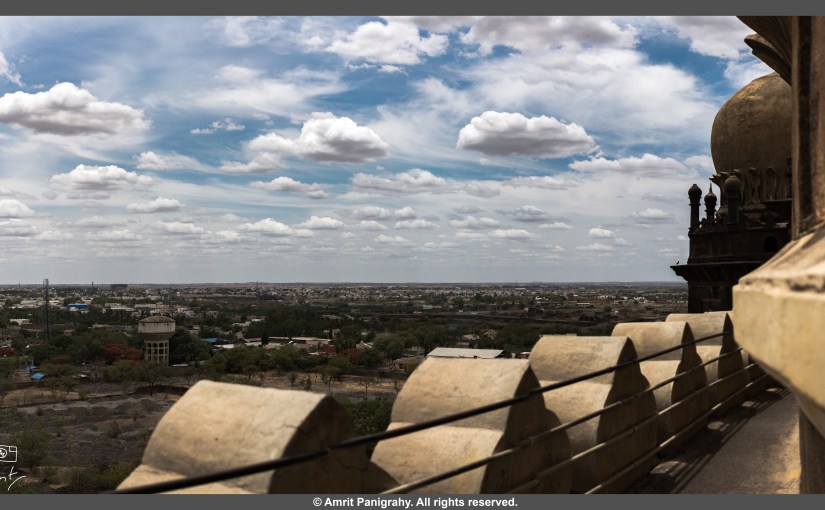
Image: Bijapuri skyline from top of the Gol Gumbuz, in Bijapur, Karnataka, India

As per the norm prevalent at that time, appeared in the scene Ala-ud-Din Hasan Bahman Shah, also known as Hasan Gangu. Bahman Shah was the then governor of Deccan under Muhammad bin Tughluq, and declared independence to establish the Bahmani sultanate, with its capital at Gulbarga (now Kalaburgi) and later moved to Bidar, in Karnataka. Per some historians, Bahman is actually derived from the word Brahmin (the Hindu caste), questionably either because of Bahman Shah’s Brahmin ancestry, or the caste of his earlier master Gangadhar Shastri Wabale (from whom he also got his other name, Hasan Gangu).

Bahman Shah could not have chosen a worse time to lay the foundation of his Bahmani sultanate, as only a decade earlier, further south in the peninsular India had emerged another power – the Vijayanagara empire. For the major part of its existence, the Bahmani sultanate would find itself engaged in mutliple battles with Vijayanagara empire contesting for power and control over land, especially the Raichur doab, before being weakened and disintegrating into five sultanates of Deccan, together called as Deccan sultanates – The sultanates of Nizam Shahi of Ahmednagar, Imad Shahi of Berar, Barid Shahi of Bidar, Qutb Shahi of Golconda and Adil Shahi of Bijapur.

Yusuf Adil Shah, founder of the Adil Shahi dynasty of Bijapur served the Bahmani sultanate before declaring independence. For the next five decades, the five Deccan sultanates would be played against each other by Vijayanagara empire’s diplomacy, before coming together in a confederacy in the battle of Talikota in 1565 AD and defeating Vijayanagara. Vijayanagara empire would not recover from this defeat, paving way for consolidation of power in southern India. Hence, the battle of Talikota is seen as a pivotal point in history of India and southern India in particular. The confederacy of the Deccan sultanates was the brain child of Ali Adil Shah I, the fifth Sultan of Bijapur.

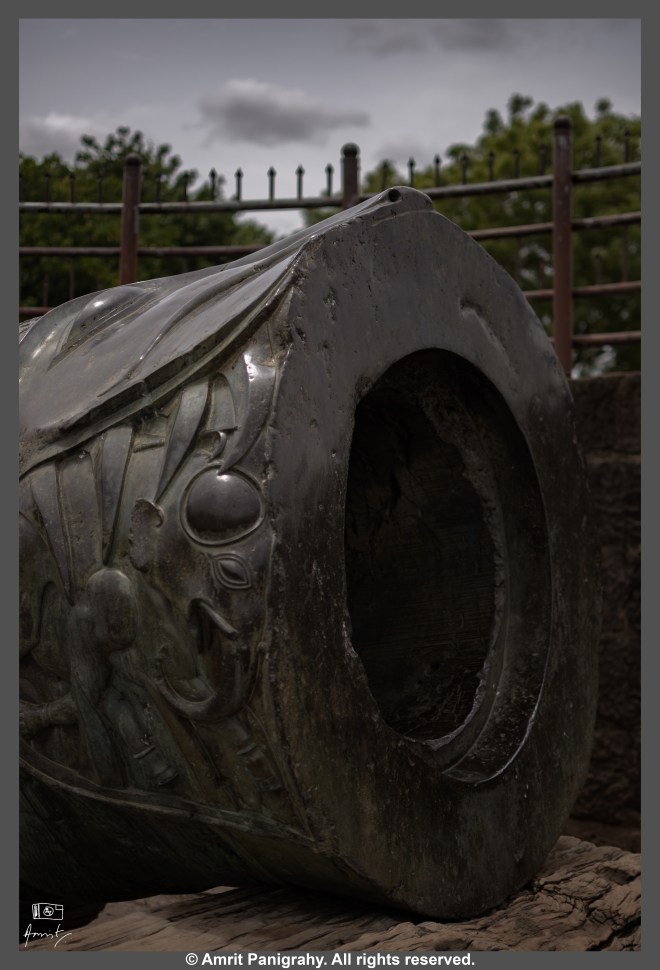
Off the topic, but worth mentioning here that the battle of Talikota also saw the Nizam Shahi of Ahmednagar pressing Malik-e-Maidan, the largest canon of its time into service.
MM-2 FB

Image: Malik-e-Maidan the second largest medieval canon in India, which now adorns a bastion on the western wall of the fort, in Bijapur, Karnataka, India

Consolidation:

After having tackled the dangers to the south, the Adil Shahis under Ali Adil Shah I and later Sultans, focused on consolidating their power, through a clever combination of marriage alliances (with Nizam Shahis of Ahmednagar and Qutb Shahis of Golconda) and military campaigns (against Barid Shahis of Bidar).

The plundered wealth from Vijayanagara gave the Adil Shahis the much needed capital infusion at the end of a very tumultuous period. The wealth was used to launch numerous ambitious projects under succeeding Sultans. The absence of any real threat for the next eight decades meant that the Adil Shahis focused more on culture, and art and creation of architectural marvels.

While the Adil Shahis were busy consolidating their powers to the south of Vindhyas, the Mughal empire under Akbar was making steady progress into peninsular India, having subdued Malwa and Khandesh in the process. Here, again a precious piece of history is lost as a footnote in the history books, because some historian mistook Akbar and Delhi for India.

I have been reading about history of ancient and medieval India for some time now. It fascinates how (un)related events of India of the past that shaped up the India of today, are (conveniently) ignored by our history books. Few weeks ago, I had written a small piece on drawing parallels during medieval India, and called it “Drawing Parallels”. You can read it here.

END OF PART I

Dome Diaries Navigator – Prologue  ||  Part I  ||  Part II  ||  Part III  ||  Epilogue

In frame (in order of appearance): 1) Cotton candies and Bijapuri skyline, from top of Gol Gombuz, Bijapur, Karnataka. Gol Gombuz is the second largest freestanding dome in the world. The outer as well as inner side of the dome is accessible through staircases inside the minars on all four sides of the structure.

2) Malik-e-Maidan, the second largest medieval canon in Indian subcontinent. Made of five metals, this canon weighs 55 tonnes and had a range of 3-5 kilometers. Noticed closely, you can notice the legs of a horse (signifying the canon’s range), an elephant body (signifying the canon’s weight), inside a lion’s mouth (signifying the canon’s roar when fired). Originally cast by the Nizam Shahis of Ahmednagar in 1549 AD, the Malik-e-Maidan now adorns a bastion on the western wall of the Bijapur fort.

VERY IMPORTANT TO NOTE: Yes, you can share this work with proper attribution. But, please seek permission before using this work (not including the photo), partially or fully. YOU CAN NOT USE THE PHOTO. Believe me, asking is better than ending up in court or facing public shaming on social media. Thanks for understanding.

© Amrit Panigrahy. All rights reserved.


Dome Diaries – Prologue

Dome Diaries Navigator – Prologue  ||  Part I  ||  Part II  ||  Part III  ||  Epilogue

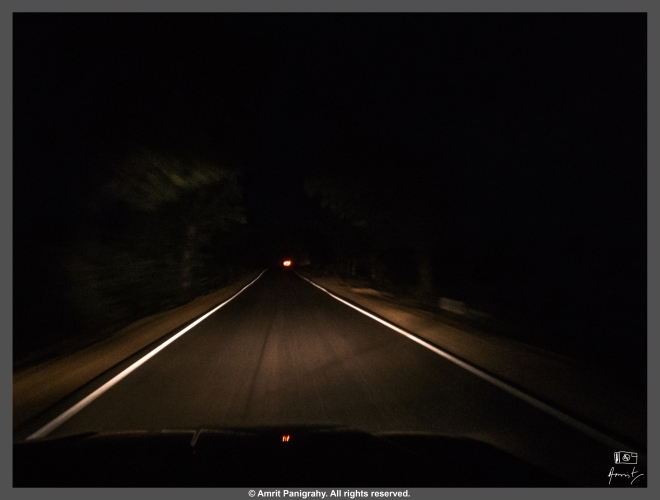
There, a brief but bright lightning far away and on my right side. One more, this time slightly closer and in the front. And as I press the accelerator, dry leaves fly on to my path and get illuminated in front of the headlamps. The winds are picking up and I can feel the crosswinds on my steering wheel. Most probably an end of summer thunderstorm. It has been dark for some time now and this stretch of road is narrow, as it passes through a reserve forest. Bad time and place to get caught in rains!

And my desk phone rang. It was the client. Damn! I was day-dreaming, again, lost in my thoughts as I stared at my desktop monitor. As if I had been teleported to one of the scenes from my recent solo road-trip.

A scene which looked like this!

Screen FB

This happens every time I come back from a trip. As if my heart stays outside the city limits, and refuses to come back in with me. And then, it keeps calling me to get out on my next trip!

This one was a long weekend road-trip. Long weekends are meant for travel, because I have recently realized that sleeping is too lazy. I realize things late, like thirty-odd-years late. Anyways, I thought of taking Pearl (that’s what I call my Scorpio; and yes, it is perfectly normal behavior!) out to stretch her legs a bit. And when you take a Scorpio out to stretch its legs, the most important thing it needs is leg room. My Pearl is no different! I decided 400kms one side was just enough leg room Pearl would need for stretching. So, Bijapur it was!

For starters, Bijapur (presently known as Vijayapura, in Karnataka, India) was the erstwhile capital of the Adil Shahis, one of the five Sultanates that the Bahamani kingdom broke into. It will not be an exaggeration if I call Bijapur as the “City of Domes”, because of the hundred odd small and big domes that dot the city’s skyline.

I have been reading about history of ancient and medieval India for some time now. It fascinates how (un)related events of India of the past that shaped up the India of today, are (conveniently) ignored by our history books. Few weeks ago, I had written a small piece on drawing parallels during medieval India, and called it “Drawing Parallels”. You can read it here.

The reason I chose Bijapur was because of the role it played in our history that shaped our present. After all, Adil Shahis of Bijapur stayed sovereign for two centuries. The same two centuries when Vijayanagara to the south, the Marathas to the west and the Mughals to the north were vying for control of the same piece of land.

Join me in a series of posts titled “Dome Diaries”, in the coming days. I will try to comprehend the later Adil Shahis of Bijapur, and their fascination for grand mausoleums, architectural marvels that are Gol Gombuz and Ibrahim Rouza, discover their religious inclinations (Adil Shahi rulers came from both sides of the Muslim community – the Shias and the Sunnis), and if possible, also their diplomacy and military might.

Dome Diaries Navigator – Prologue  ||  Part I  ||  Part II  ||  Part III  ||  Epilogue

In frame: A narrow stretch of empty road lit by my car’s headlamps and shot on mobile (No! I was not using the mobile while driving). This stretch of road was between Kalaburgi (Gulbarga as it is presently known), Karnataka and Hyderabad, Telengana, in India.

VERY IMPORTANT TO NOTE: Yes, you can share this work with proper attribution. But, please seek permission before using this work (not including the photo), partially or fully. YOU CAN NOT USE THE PHOTO. Believe me, asking is better than ending up in court or facing public shaming on social media. Thanks for understanding.

© Amrit Panigrahy. All rights reserved.

Arsalan’s last prayer

The instructions were very specific. The client wanted the knife to be extra sharp, and dipped in deadly poison. Just to be doubly sure. So that, even if the knife didn’t kill him, the poison definitely would. And it had to be on a Friday, a day Arsalan devoted completely to his God, a day he didn’t touch his weapon and wore no armor.

Arsalan, a warrior of Persian decent and a Muslim, was a general in the Vijayanagara army, Vijayanagara’s chief military strategist and commander of its famed artillery and cavalry units. A middle-aged battle hardened man, he had won many battles for Vijayanagara, with his unquestionable loyalty to the King, his valor and strategies.

He was born in Persia to an unmarried woman and was left to his own fate after his mother died. While fending for himself in the streets of Isfahan, he had heard tales of a place called Hindustan. After having saved enough, he traveled to Hindustan at the age of thirteen, and was hired by a Turkish noble as a help. Few months later, his master had taken him in a hunting expedition. This is when a Lion sneaked in to the camp on one night. He killed the lion with nothing but a knife, and he was just fourteen. This is from where he got his name – Arsalan, Turkish for lion. And he never looked back from that day on.

A man without any family, Arsalan used to be a hired hand till few years back, a commander of a group of merceneries with their loyalty only to the highest bidder. He fought many battles on the side of the highest bidder, saw many atrocities being committed in the name of religion, and God.

During his last assignment as a hired hand, he was to join the forces of the Sultan of Berar, who was mounting an expedition on an empire of infidels to the south, the Vijayanagara empire. It was on a Friday that the battle was fought. Arsalan, had never in his entire life seen such brave soldiers, the soldiers of Vijayanagara. Arsalan killed hundreds of them and they still kept coming. At the end, the army of the Sultan of Berar was defeated, and every single one of Arsalan’s merceneries were killed and he himself was grieviously wounded. Left for being dead, he was rescued by the soldiers of Vijayanagara and was taken to the capital Hampi for better treatment of his wounds. He was impressed by the fact that the Vijayanagara had citizens from all faiths, including Muslims – and was not an empire of infidels, as was being portrayed.

When he recovered, grew stronger and was ready to leave, the King requested his presence in the court. The King, who himself was impressed by Arsalan’s military tactics earlier, asked him to join the Vijayanagara army as a general, and promised him religious freedom, among other things. Arsalan couldn’t deny the offer being made by his savior. Arsalan also took a vow that he will not pick up his weapon on Fridays, as a mark of respect to the brave soldiers of Vijayanagara he had slayed on the same day, in the earlier battle.

His presence in Vijayanagara army meant that Sultan of Berar couldn’t win even an inch of land to the south. So, the Sultan had hired an assassin to get rid of him.

On that fateful Friday, while coming back from the mosque, the assassin in the guise of his bodyguard, stabbed him in the neck. Even before he could know what had happened, Arsalan was on the ground. He could see the mosque at a distance, the mosque which his infidel King had ordered to be built for him.

Slowly, the voices around him faded and he slipped into darkness…

That was the last prayer Arsalan ever offered!

4. The last prayer of Arsalan Pathan 17 Mar Final

DISCLAIMER: This is a work of fiction. Any resemblance to any person living or dead is purely coincidental.

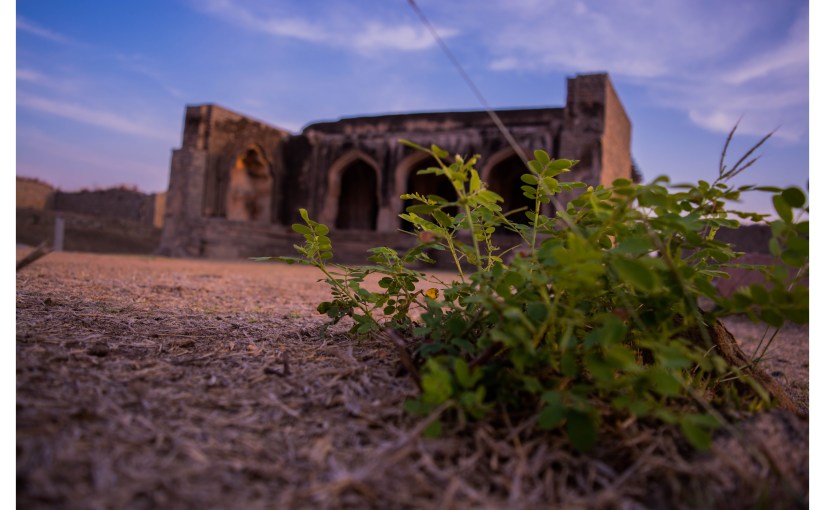
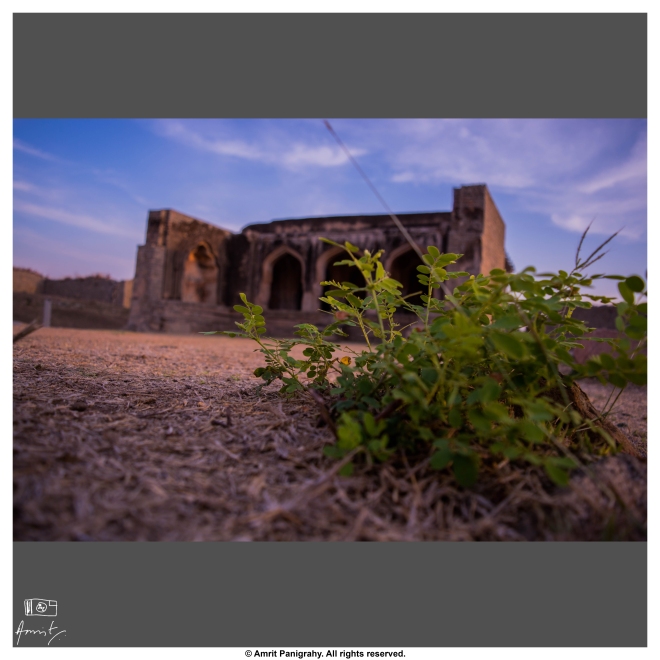
In frame: A low angle of the mosque inside the palace complex, in Hampi, Karnataka, India.

VERY IMPORTANT TO NOTE: Yes, you can share this work with proper attribution. But, please seek permission before using this work (not including the photo), partially or fully. YOU CAN NOT USE THE PHOTO. Believe me, asking is better than ending up in court or facing public shaming on social media. Thanks for understanding.

© Amrit Panigrahy. All rights reserved.

I was there…. Waiting for you!

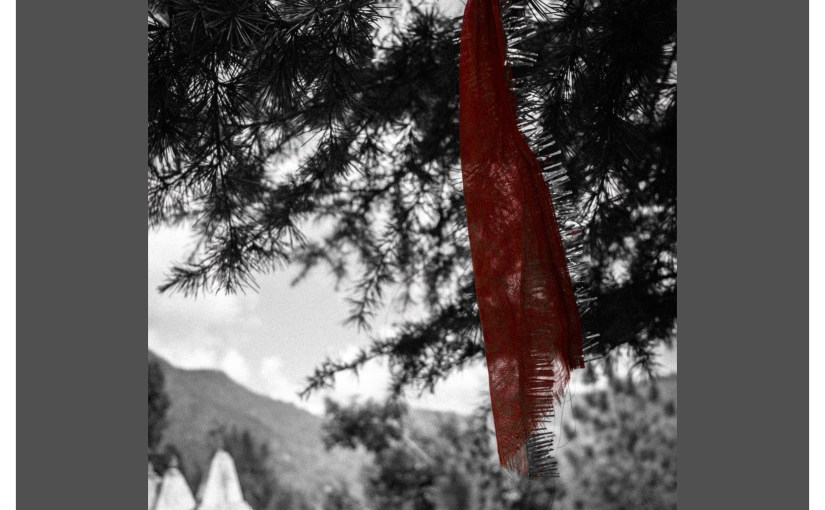
I waited there, under our pine tree,
And I went there for many more days,
Hoping you would come one day.

It was futile, I was told,
And that you would never be back.
But, I wanted to give it a try.

I wanted to give it a try,
Just so when my time comes,
I won’t feel that I did not wait enough.

And when I realized many springs later,
That you would never come,
I left there the scarf you had given me.

The scarf, my only piece of memory of you,
For it had your scent, as fresh as dew,
It was the only thing that I had of you.

As I wanted to let you know,
Just in case you showed up..
….That…

I was there…. Waiting for you!

————————————————

DISCLAIMER: Penned by yours truly, this poem is a work of fiction. Any resemblance to any person living or dead is purely coincidental.

In frame: A ritualistic scarf tied to a pine tree in the Himalayas, on the way from Naitala to Guptakashi, in Uttarakhand, India. I found small temples dedicated to local Gods as well as such ritualistic things, common place in the Himalayas.

VERY IMPORTANT TO NOTE: Yes, you can share this work with proper attribution. But, please seek permission before using this work (not including the photo), partially or fully. YOU CAN NOT USE THE PHOTO. Believe me, asking is better than ending up in court or facing public shaming on social media. Thanks for understanding.

© Amrit Panigrahy. All rights reserved.