64 Yoginis – And a message to my father

The 64 Yogini Temple:

Ranipur Jharial was the first stop on the recent road-trip I did with my parents in Odisha. We reached here after a gruelling 6 hours drive from my home town. The 64 Yogini temple of Ranipur Jharial in Bolangir district in Odisha, is one of the only 4 such temples dedicated to 64 Yoginis that exist in the whole country. Two of them are in Odisha – the other one in Hirapur, near Bhubaneswar.

The 64 Yogini temple is located atop small hill, which is a single rock spread over many acres. On that rock there are also many small temples dedicated mainly to Lord Shiva. What would catch your eye however is the peculiar structure of the 64 Yogini temple.

64 Yogini Temple
The 64 Yogini Temple under the sun on a cloudy day, in Ranipur Jharial, Bolangir, Odisha, India.

It is a circular hypaethral temple. The deities of 64 Yoginis adorn the inner side of the circular temple. The centre of the temple is adorned by an image of three faced Lord Shiva, Adi Yogi himself, embracing his wife Goddess Parvati. This temple is believed to have been built by Somavamshi Keshari kings in 9th-10th century AD. All the deities are made of sandstone.

Lord Shiva
Three faced Lord Shiva at the center of 64 Yogini Temple, in Ranipur Jharial, Bolangir, Odisha, India. I shot this frame using my 35mm Canon FTb QL manual film SLR on an Ilford HP5 Plus 400.

The temple is designed in such a way that energy from all the 64 Yoginis would stay within the circular wall of the temple, and the yogis and sadhaks who did their sadhana here would benefit immensely from the concentrated energy from all Yoginis. The 64 Yoginis also represent 64 types of Siddhis a human can achieve.

The Indralath Temple:

Indralath Temple
The elevation of Indralath Temple from up close, in Ranipur Jharial, Bolangir, Odisha, India.

Another attraction in Ranipur Jharial is the 60ft tall Indralath temple, the oldest and tallest brick temple in Odisha. Also built during 9th/10th century AD by Somavamshi Keshari kings, it is believed that this temple was probably dedicated to Lord Shiva or Lord Vishnu. Interestingly however, the designs and statues on the outer wall of the temple suggest Buddhist influence on the architecture. The statues on the outer wall are made of clay and mud and are burnt to give them longevity, as it was done for the bricks.

The Experience:

Before I started the journey, I was told that it is not advisable and safe to go on top of the hill during the month of Ashadh, or the first month of monsoon, because of the numerous lightning strikes that have happened in the past. We were well past Ashadh, so that was a relief.

64 Yogini Temple
The 64 Yogini Temple, in Ranipur Jharial, Bolangir, Odisha, India. I shot this frame using my 35mm Canon FTb QL manual film SLR on an Ilford HP5 Plus 400.

When I went on top of the rock, near the temple, the first thing I noticed about the place was the calmness, even if it was windy. However, the calmness was only on the surface. The place was full of some mystic energy, as if all the yogis and sadhaks who did their sadhana here left their legacy behind for the later generations to experience. Although there were many things running through my mind, when I closed my eyes, it was as if I got teleported instantaneously into another realm. What happened with my father however, was interesting! And I was a witness.

My father, as were both my paternal grand parents, is a follower of Satya Mahima Dharma, and he has been practising meditation for many years now. One of the youngest sects of Hinduism, quite interestingly, this sect also had 64 Siddh Purush (64 men with Siddhis). Numbering just a tiny fraction of Odisha’s population the followers of this sect do not worship any deity. Very much a part of Hinduism, they believe that to reach the Supreme you do not need any mediums. One of my next projects is to highlight this sect to the mainstream, so look out for that.

Being himself, my father decided to check how it feels to sit in meditation near the 64 Yogini temple. So, he removed his shoes, sat on the platform and closed his eyes and went into a meditative state. And I got busy taking photos. Few minutes later, I got back to him, and by that time he was done. I asked him how was it, and he told me that he could feel some kind of energy. After that we decided to visit the nearby Indralath temple nearby, and it was all fine till then.

It got weird when after having spent few minutes in the Indralath temple, we came out and were getting ready to get inside the car. A drunk shepherd approached my father from nowhere, and said “A Mahima sadhu (a preacher of the sect of which my father is a follower) had come here many many years ago when I was a kid. And he hosted a Balyaleela (a ritual done only special occasions), and there were lakhs of people.”

There were no identifications either on my father or on our car which suggested that any of us were a follower of that particular sect. The practitioners of this sect are very very small fraction of  the total population. To give you all an idea, there are only 2/3 families of this sect in my hometown which a population of at least one lakh. Too much of a coincidence, right?

The only thing that could possibly explain this incident was probably the fact that there are strong energies still existent in the 64 Yogini temple and nearby, and after father meditated there, he “was sent a message” that the path he had chosen for himself (that of Satya Mahima Dharma) is right for him, and he does not need to divert now. We reached at this conclusion after discussing on this incident for some time.

And then we decided to move ahead with our journey, a 2,000km road-trip across Odisha, which turned out to be quite eventful in its own right. More on that later!

VERY IMPORTANT TO NOTE: Yes, you can share this work with proper attribution. But, please seek permission before using this work (not including the photo), partially or fully. YOU CAN NOT USE THE PHOTO. Believe me, asking is better than ending up in court or facing public shaming on social media. Thanks for understanding.

© Amrit Panigrahy. All rights reserved.


Caro(m)kshetra

Caro(m)kshetra
The Striker and the pieces on a carom board

They are family, kin and friends, how could one kill,
Void they would leave behind, who would be able to fill.

The ones that he grew up playing with, and the ones who taught,
Unable to take on them, was there a way the battle won’t be fought.

The battlefield lay in front of him, and the warriors gave battle cries,
He was unable to pick up his weapon, even after a million tries.

He was given a code to live by, and million reasons to kill,
Told they were his enemies, whose void he need not fill.

He was shaken violently, when he hesitated and refused to fight,
To see things clearly, like he would in the morning after a dark night.

He was chosen for this task because he was mighty and just,
Unlike mightier warriors filled with jealousy and blood-lust.

The ones in front of him were dead the day they joined the wrong,
With justice and morality on his side, he felt ever so strong.

Understanding his duty and worth, he started killing with rage,
Without seeing who was in front of him, or what was their age.

He killed for many days, and many of his beloved ones were taken away,
Rule of justice finally established when he stopped, and was there to stay.


This poem and the accompanying photograph are my attempt to draw an analogy between the Kurukshetra war and our day to day life, even something as uneventful as playing carom.

I try to portray one of the most important teachings of Bhagvad Gita, that attachments make us lose sense of right and wrong, just and injustice, moral and immorality. To uphold and do what is right, one must rise above every form of attachment, and look at things objectively. And when the time comes to do one’s duty, it has to be done no matter what.

In frame: The striker and the pieces on a carom board, clicked on manual mode using my Oneplus 3 phone during the carom tournament at office. This photo was edited using Google Snapseed.

VERY IMPORTANT TO NOTE: Yes, you can share this work with proper attribution. But, please seek permission before using this work (not including the photo), partially or fully. YOU CAN NOT USE THE PHOTO. Believe me, asking is better than ending up in court or facing public shaming on social media. Thanks for understanding.

© Amrit Panigrahy. All rights reserved.

Mountain Song

I was unsure and had many questions when I started,
Unable to understand whether to hold on to those who departed.

I tried and any attempt to touch my past was futile,
As from behind the veil it waved at me with a “smile”.

In a failed attempt, I fought with my past in present,
An act that I would never consider to be decent.

I cried as I saw the past slip away, to which I was so attached,
It was a healing process and I thought I was being attacked.

I decided to quit the things that I was doing,
With tears in my eyes I tried a new beginning.

There was one more thing that I had still to let go,
The sense of I, me and mine, which they call the ego.

As I looked at the winding road up the hill,
Towards a destination I hadn’t started still.

It looked like I was a long long way away from my goal,
I decided to climb nonetheless and it started taking a toll.

Shivering while climbing as cold touched my bones,
On the roads I found freshly fallen pine cones.

The pine cones reminded something that I had chosen to forget,
That even those high up also fall and eventually turn to dust.

When hungry, I found fresh apples from a road side garden,
Tastier I am sure than the one had by Eve and Adam.

When I was thirsty I drank from a mountain spring,
A respite that only pure mountain water could bring.

It was the Almighty telling me to relax and not to worry,
And that I would be provided for and I need not be sorry.

The mountains and highlands that people called divine,
When I reached there, I was sure I would be fine.

The mountains were so big, and the snow so white,
And I told myself that the teachers were always right.

Mountains told me to accept that I was puny and the outcome I can’t influence,
I am not even a speck of dust, when it comes to the whole vast universe.

The snows told me that everything here is inherently pure,
And we pollute everything looking for useless cure.

When I came down from the mountains, I was not like when I went,
Left there many things I was attached to, for which I was sent.

I was questioned for the decisions I took and things I left behind,
I told them as long as this did good to me, I really didn’t mind.

Been a year since I came back from the mountains,
And the memory still as fresh as last night’s rains.

Looking back at last year, it all makes sense now,
The answers to my why, what, when and how.

In human terms, this journey has lasted only a year long,
Ode to the mountains and my evolution, this mountain song.

Mountain song
A temple by the mountain road, high in the Himalayas

The poem was penned by me, where I have tried to put in to words my evolution from what I was a year back when I went to the Himalayas.

In frame: A temple by the mountain road high in the Himalayas, on the way from Naitala to Guptakashi, in Uttarakhand, India. I found these small temples dedicated to local Gods as well as such ritualistic things, common place in the Himalayas.

VERY IMPORTANT TO NOTE: Yes, you can share this work with proper attribution. But, please seek permission before using this work (not including the photo), partially or fully. YOU CAN NOT USE THE PHOTO. Believe me, asking is better than ending up in court or facing public shaming on social media. Thanks for understanding.

© Amrit Panigrahy. All rights reserved.

Advertisements

Buddha, who?

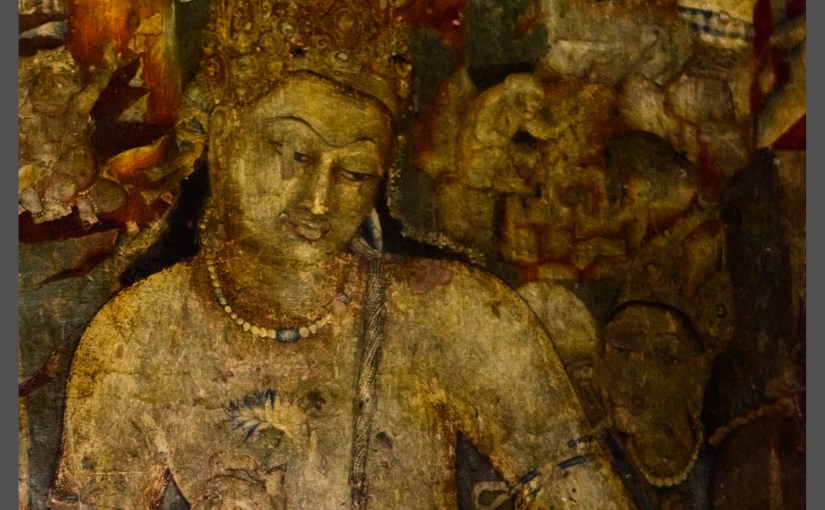
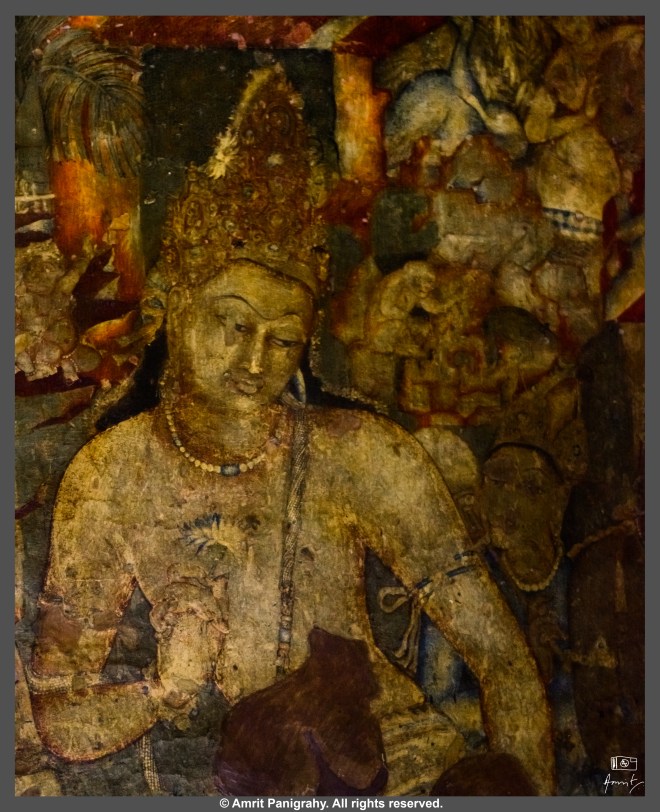
He is Avalokiteshwara also known as Padmapani. He is a Bodhisattva, who embodies compassion of all the Buddhas. Avalokiteshwara literally translates into “Lord who contemplates”, and Padmapani is someone who has a lotus in his hand (Padma – lotus, Pani – hand).

Per early Buddhism, Bodhisattva is Gautama Buddha in his previous lives, and forms the very foundation of Jataka tales. According to later Buddhism, Bodhisattva is someone who has a wish and mind compassionate enough to attain Buddhahood.

Who is a Buddha?

Wait! What do I mean by “a” Buddha? Were there more than one Buddhas?

By Buddha, we generally mean Gautama Buddha. And He was just one of them, but unquestionably the most popular one. Actually, Buddha is someone who has attained enlightenment and has fully comprehended the four noble truths of – pain, origin of pain, cessation of pain, and the path that will lead to the cessation of pain.

According to contemporary Tibetan Buddhism, Avalokiteshwara is someone who looks after all beings with compassion, and usually emanates as Dalai Lama. He is also known as Shadakshari, the “Lord of six syllables”.

What six syllables?

If you have seen those colourful Tibetan prayer flags, have you ever wondered what is written on them? This is what you will find written on them – “Om Ma Ni Pad Me Hum”. That’s six syllables. Each of these six syllables are believed to purify the following things in humans, respectively – Pride or Ego, Jealousy or Lust, Passion or Desire, Ignorance or Prejudice, Greed or Possessiveness, Aggression or Hatred. That is precisely all of humanity’s problems in six syllables.

Padmapani
Padmapani, the most famous painting in Ajanta caves, Maharashtra, India.

Why Buddha?

In ancient India, when the vedic culture turned from being highly scientific into merely ritualistic, the caste system became very rigid. And a vacuum was created which demanded the presence of a spiritual leader who could make humans see the things the way the were, and hence emergence of Gautama Buddha. And He became popular for taking a scientific approach towards attaining Nirvana. His teachings were very simple and spread like wildfire, sweeping settlement after settlement, and laid foundation of early Buddhism.

In frame: Padmapani, the most famous painting in Ajanta caves, Maharashtra, India. You can find this painting on the left side of the sanctum in cave no.: 1 of Ajanta. Because of extremely low light, photographing paintings inside the Ajanta caves can be challenging and can put your technical skills to test, especially if you are clicking in manual mode.

VERY IMPORTANT TO NOTE: Yes, you can share this work with proper attribution. But, please seek permission before using this work (not including the photo), partially or fully. YOU CAN NOT USE THE PHOTO. Believe me, asking is better than ending up in court or facing public shaming on social media. Thanks for understanding.

© Amrit Panigrahy. All rights reserved.

108 days that mattered

Lucky Max!

I had a friend called Max. His father was a very rich man, with a lot of money. So, on Max’s 21st b’day his father gifted him a jet plane. When Max saw it, he was very happy. As always, he threw away the user manual and got into the cockpit, and after a lot of trying, he could make the jet plane move on the road. Happy with his new found love for “driving” the jet plane, he would “drive” his jet plane to college, to meet friends and to nightclubs.

Lucky Max! Would you like to be like Max? Who wouldn’t want a rich father gifting a jet plane on birthdays.

If you think about it, we are all Maxs “driving” our jet planes around. Without understanding true potential, we “drive” around in our jet planes, rather than figuring out what the jet plane is actually capable of. The jet plane being the body and the mind.

I am talking about Yoga. But wait, isn’t Yoga about physical exercise?

Yoga is the answer

Honestly, I did not know what the question is, though! And I am glad that I did not know the question. Be it physical, metaphysical, mental or spiritual, all the roads in these dimensions converge and emerge from Yoga. Yoga or Yog in Sanskrit means “to add” or “to join”. What are we adding or joining? I will get to that.

Yoga WM

Basically, there are four forms of Yoga. Yeah exactly, four. The Yoga you see in TVs is called “Kriyayoga”, and as the name suggests it is a set of actions. And these actions activate certain points in your physical and subconscious self. Then there are Bhaktiyoga (devotion), Gyanayoga (knowledge), Karmayoga (duty). It is only when a person does all the four Yogas in some proportion or the other (yeah, individual requirements are different), that (s)he sets in motion the harmony (answer to what we are joining or adding, from above) that propel her/him towards a higher state of being.

What can you achieve by going to a higher state of being? Well, I can’t tell you more, other than the fact that the view is nice from higher up. It will help you achieve control over things that happen to you and around you. It would mean your inner self is aligned with the outer being and the universe. You are part of everything and everything is a part of you.

My Yoga

In my case, in one way or other I was already doing the other three Yogas except Kriyayoga, subconsciously. In fact, we all do! And when I was suggested by good friend to add Kriyayoga to the mix, I gave it a try. And the results I have achieved surprise me. The results may seem insane to some. But again, sanity is a relative term. Sanity for some could be outright insanity for others.

The Kriyayoga that I do is called “Shambhavi Mahamudra”, taught by Sadhguru. I have done it for 108 days at a stretch, without fail. And I feel connected to myself and everything else around me like never before and that outcome itself is good enough. But, I am also exploring the capabilities of my body and mind (which are potentially limitless). And what 108 days these have been. Never in my life have I felt so empowered.

One piece of advice, though. Nothing undermines any form of Yoga more than doing Yoga with a specific purpose in mind. In fact, do not have any purpose at all. Let it do its own thing, and your transformation to another being will become possible in an infinite number of ways. But still, if you want to understand the tangible benefits that I derived from what I do, here are 10 of those:

  1. Better sleep quality
  2. Being endlessly energetic throughout the day
  3. No need of external stimulants
  4. Being happy all the time
  5. Worry a lot less
  6. Focus a lot more
  7. Fall sick a lot less (like never!)
  8. Observing an event from multiple point of views, simultaneously
  9. Sharper intuition

And last, but not the least, and my favourite one at that,

  1. Manifesting people, events and things into my life

But again, these are just the side effects, and changes that I have observed just at the surface level. The real achievement stays at a much much deeper level, and very personal at that.

When should you start?

Are you waiting for that bad time at office to get over to start Yoga? Are you waiting for your personal life to be sorted to start Yoga? May be you think you are too young to start Yoga? May be you think you are too strong to start Yoga? May be you want to experience “everything” before you embark on this path? Are you too cynical and think yoga doesn’t really help?

Well! I was waiting for that bad time to get over. I was waiting for my personal life to get sorted. I thought I was too young and strong to start Yoga (yes, I did!). I wanted to experience “everything” before I embarked on this path. And I was too cynical and really believed that Yoga doesn’t help. And, I realised that I had lost precious time thinking these. I don’t know if the things that worried me are at satisfactory level at present, because they really don’t bother me anymore.

Also, it is only wise to learn to pilot the jet plane and take off as soon as possible, rather than driving it around endlessly. No?

So, here is wishing all of you a healthy and content state of being.

Keep calm, do Yoga!

Please note: I do not have any intention of being a yoga teacher. But I can guide you to one of the best in the field. If you are keen, just drop me a message or a comment below.

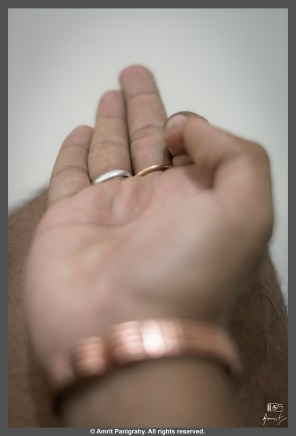
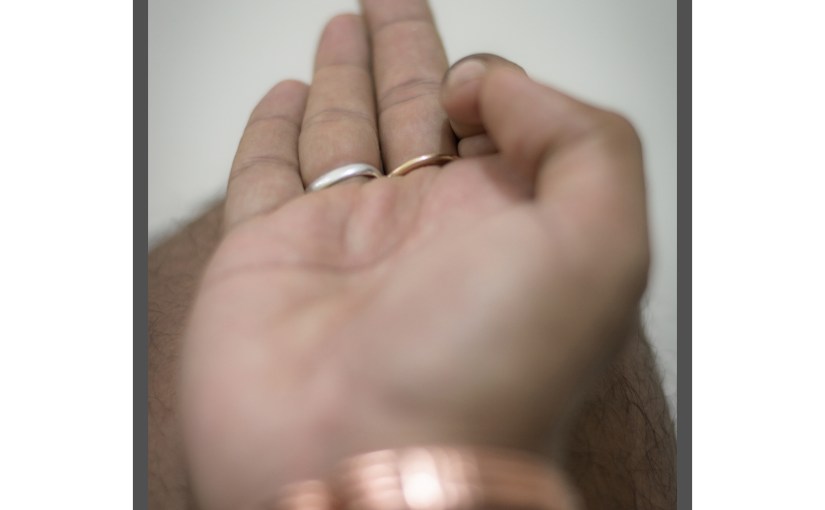
In frame: My Gyanamudra

VERY IMPORTANT TO NOTE: Yes, you can share this work with proper attribution. But, please seek permission before using this work (not including the photo), partially or fully. YOU CAN NOT USE THE PHOTO. Believe me, asking is better than ending up in court or facing public shaming on social media. Thanks for understanding.

© Amrit Panigrahy. All rights reserved.
Love story 1 – Act I: Of bad tea, and good coffee!

He made his cup of morning tea, and sat down to work on his blog. “I make awesome tea”, he thought after taking the first sip, taking pride in his tea making capabilities. He wasn’t yet done basking in his pride, he heard her voice, like every time.

Moon2 WM Final

And like every time, this time too her voice said, “You make horrible tea!” Lest she knew, that whenever she was around, all his attention was focused on her, and not on the tea, that he was making. And he would eventually end up spoiling the tea, every single time.

But, he had his moment of glory. It was a long two months wait for him, since she had changed her job and moved cities. When she was with him, she was a part of everything he did, every plan he made, knowingly or unknowingly. Though he had been preparing for her move, it was still painful. And after two months, he paid her a visit.

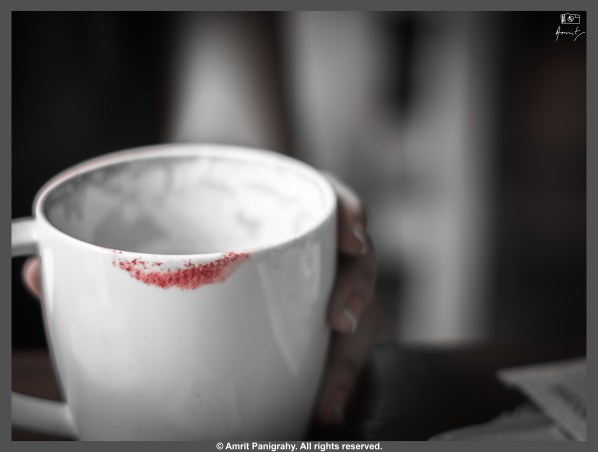
“You make good coffee!”, she said as she sipped from her cup. “Why the tea you made was atrocious every single time, when I came down to your place”. He had taken special care not to screw up the coffee this time. Giving it all the attention, even her share of his attention. And received an appreciation for it, from her, one person he valued the most. They just sat there, sipping coffee, the coffee he made. He was going back, with promises of returning soon.

That was a year back! One long year. It is strange how things normalise or seem so, over one year. Memories are in black and white they say. The only colour he could remember was that of the stain of her red lipstick on the cup.

Moon2-6 WM Final

And, only if he had known that he was seeing her for the last time, he would have screwed up the coffee too.

**END OF PART I**


Wondering what happened to her? All in good time, my friends! You got to wait for the next part, right?

Let’s call it “A tough call!”…..

/Disclaimer: A work of fiction. Any resemblance to any character living or dead is purely “coincidental”./

In frame: Moonmoon Sharma, a good friend and a talented model.

VERY IMPORTANT TO NOTE: Yes, you can share this work with proper attribution. But, please seek permission before using this work (not including the photo), partially or fully. YOU CAN NOT USE THE PHOTO. Believe me, asking is better than ending up in court or facing public shaming on social media. Thanks for understanding.

© Amrit Panigrahy. All rights reserved.
A promise to my witness!

The “Me” that descended from the Himalayas was completely different from the “Me” that had ascended about a week earlier.

My ego and beliefs were questioned at every turn of the switchbacks, while climbing up and down the Himalayas. And there are like a million switchbacks in the entire route. So the questioning was a million times over.

I thought I was better off the way I was when I started climbing! But, as time progressed I could sense that a change had been set in motion. It was the “Why” part that I was not able to comprehend! Why was I being put through the change, when life seemed so perfect? The “Why” was so overwhelming for my mind, that my emotions could not cope with it.

On my last day, I stood on the banks of Ganga, with tears swelling in my eyes. And I asked her “Why?”. All I could hear was her roar. I asked her repeatedly. Ganga did not answer.

But Ganga was a witness. She was there all along, in the form of Ganga herself, or Bhagirathi, or Alaknanda, or Mandakini, throughout my journey. And she had witnessed the beginning of my change. So, I promised Ganga, my witness, that I might not find an answer to the “Why” that I had asked her, but the change will continue. And when I return to see her again, I would return a better man.

Me being me, I still do not understand how much better is good enough. So, I am thriving to make myself better, in whatever way possible. Probably, there lies the answer to the “Why”!

In frame: Ganga Arati, Triveni Ghat in Rishikesh, Uttarakhand, India. This is a tribute to my witness, Ganga, who stayed by my side throughout my journey in the Himalayas.

VERY IMPORTANT TO NOTE: Yes, you can share this work with proper attribution. But, please seek permission before using this work (not including the photo), partially or fully. YOU CAN NOT USE THE PHOTO. Believe me, asking is better than ending up in court or facing public shaming on social media. Thanks for understanding.

© Amrit Panigrahy. All rights reserved.
Gratitude and humility? Who the hell cares?

Can a brilliant looking flower be a brilliant looking flower, on its own? The stem plays an important role in how the flower turns out to be. It is the stem that connects the flower to the plant, supplies all its nutrients, and helps it stay fresh. And it is the same stem that keeps the flower above all the muck and mud below. The moment the flower gets carried away by its own persona, leaves behind the stem, and detaches itself from the roots, it will not have many moments of beauty left in it, and will end up being part of the same muck that it was once so distinguished from. Gratitude and humility play a vital role in a person’s life, the same role that the stem plays in case of the flower.

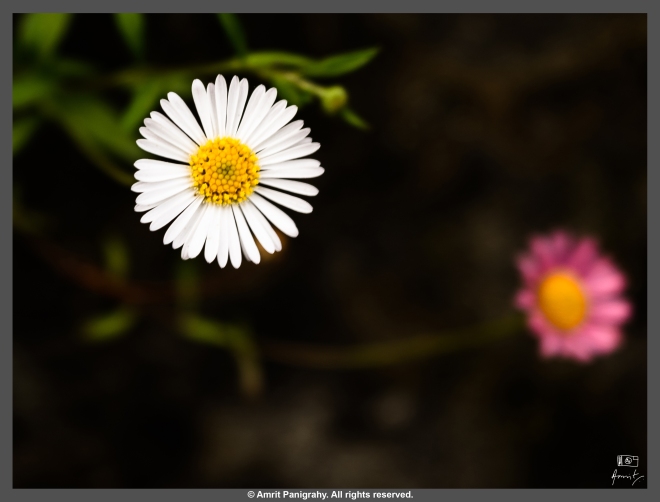
Swaying Himalayan Aster
Flower of the Swaying Himalayan Aster (Botanical name – Aster Molliusculus), a perennial herb found in the Himalayas, at altitudes of 1,800-3,000m above mean sea level. This one was on the banks of Bhagirathi (river Ganga as she is known before reaching Dev Prayag), on the way back from Gangotri, Uttarakhand, India.

I admit, I used to be a thankless person, and was not a humble soul for sure. Not because I had something against showing gratitude or humility, but because I felt I was entitled to things, people, or feelings. Hence, I never felt the need to show my gratitude, and be humble while doing so. I took tremendous pride in all the things I knew, in all the things I had achieved and in all of my capabilities. That’s the way I was! Until that day…

That day, the majestic mountains taught me humility. And when I was stranded on top of those mountains due to bad weather, I learnt my lesson on gratitude. I threw away my “red book of grudges” in those mountains, for good.

The learning process is a long way from being over, though. But, I feel I am making progress in the right direction. Over the months, I have realised that being humble is the best way to unlearn and learn life. And being grateful creates more space inside me for everything good that the world has to offer. Both of these together, they help me stay content, connect me to the world in a much better way and negate my ego. I must say, I have come a long long way from the day I was stranded on top of that mountain.

Now, the best part about us humans is, we do not necessarily have to experience something to learn. We can learn from others’ experiences as well, thus saving us precious time. So, here is my experience for you, in one sentence –

Be grateful for everything you have (even for having your annoyingly critical friend), be humble in front of everyone (even an illiterate or someone who comes from way below your social stratum), and you will find happiness!

In frame: Flower of the Swaying Himalayan Aster (Botanical name – Aster Molliusculus), a perennial herb found in the Himalayas, at altitudes of 1,800-3,000m above mean sea level. I framed this one on the banks of Bhagirathi (river Ganga as she is known before reaching Dev Prayag), on my way back from Gangotri, Uttarakhand, India.

VERY IMPORTANT TO NOTE: Yes, you can share this work with proper attribution. But, please seek permission before using this work (not including the photo), partially or fully. YOU CAN NOT USE THE PHOTO. Believe me, asking is better than ending up in court or facing public shaming on social media. Thanks for understanding.

© Amrit Panigrahy. All rights reserved.