Sees it all!

“Chaka aakhi sabu dekhuchi”, is a popular saying in Odia. Which translates to “Lord Jagannath sees it all”. Chaka in Odia means round, Aakhi in Odia means eyes. Notice His round eyes.

When I was in Puri last month, I had mentioned that I was planning to visit Puri during Rathyatra. Well, here is a secret! I was not planning, I had actually promised Him. 26 years were too long a gap, you see. You can read about my last month’s visit here.

Reached here in Puri, just in time to see the annual outing of the Gods, the Rathyatra of 2017. Saw Him gracefully moving towards his chariot (we call it Pahandi in Odia), with his crown (called Tahia in Odia) moving back and forth as He moved. I was quite far off when this was happening, at least couple of hundred meters, may be more. But as He appeared out of the temple main gates, the atmosphere was filled with cries of His name all around. And guess what, I am the first person from my whole family to witness it happening in front of my eyes (as confirmed by my father).

He sees it all!!
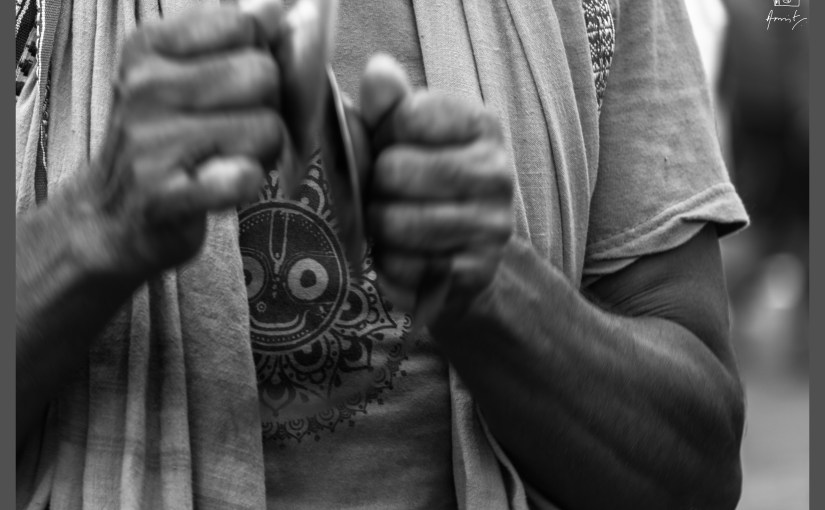
Lord Jagannath on a devotee’s t-shirt as he plays his Gini (a traditional Odia music instrument).

The energy on the Grand road (called Bada Danda in Odia) was so much, I saw people dancing for hours (you read that right!) to folk songs from all over Odisha, as well as to the tune of drums (dhol and mridang) and khanjanis (see picture to know what it is). It was like a rave party from another age. And it was as if they were drawing their energy from an eternal source, may be it was Him as He smilingly moved towards them on top his chariot. Because, what I saw there today is not humanely possible. You got to see it to believe it. And boy, was it overwhelming for me. Add to it all the people around (my estimate is half a million, at least), a perfect recipe to get disoriented (in a good way), call it trance!

There were a lot of traffic restrictions all around the town, so I walked all the way, and the last few kilometers were barefoot on the beach as the waves played hide and seek. By the time I reached back at my hotel, I must have clocked 15 kilometres, all in a days walk.

Now, as I sit in my hotel room and write this, I was thinking. How about I bring to you all the tales, legends, facts and stories about Lord Jagannath, that I know? Also, how about stories of Konark? You know that the construction of the Sun temple in Konark was related to events that unfolded in Puri, right?

So, let’s call them “Jagannath series”.

Signing off from Puri, land of Lord Jagannath!

In frame: Lord Jagannath on a devotee’s t-shirt as he plays his khanjani (a traditional Odia music instrument). You can see Him anywhere you want. You just need to look harder. And He sees you, all the time.

VERY IMPORTANT TO NOTE: Yes, you can share this work with proper attribution. But, please seek permission before using this work (not including the photo), partially or fully. YOU CAN NOT USE THE PHOTO. Believe me, asking is better than ending up in court or facing public shaming on social media. Thanks for understanding.

© Amrit Panigrahy. All rights reserved.

Dome Diaries – Part II: Adil Shahi and curse of the Maratha

Dome Diaries Navigator – Prologue  ||  Part I  ||  Part II  ||  Part III  ||  Epilogue

Background:

The battle of Talikota in 1565 AD and the ensuing defeat of Vijayanagara empire ushered in a period of relative stability, which resulted in prosperity for all the Deccan sultanates. It was particularly so for the Adil Shahis of Bijapur as they shared the longest border with Vijayanagara. Post Talikota Adil Shahi diplomacy was a perfect balance between marriage alliances (with Nizam Shahis of Ahmednagar and Qutb Shahis of Golconda) and military campaigns (against Barid Shahis of Bidar). The idea of peace is a relative term, and in medieval India it could be gauged by comparing the length of the reigns of different rulers. Ibrahim Adil Shah II, the sixth Sultan of Bijapur and later his son Mohammed Adil Shah reigned over Bijapur of eight decades. The Bijapur sultanate remained in existence for two centuries in total. Now, that’s peaceful!
Part 2-2 FB

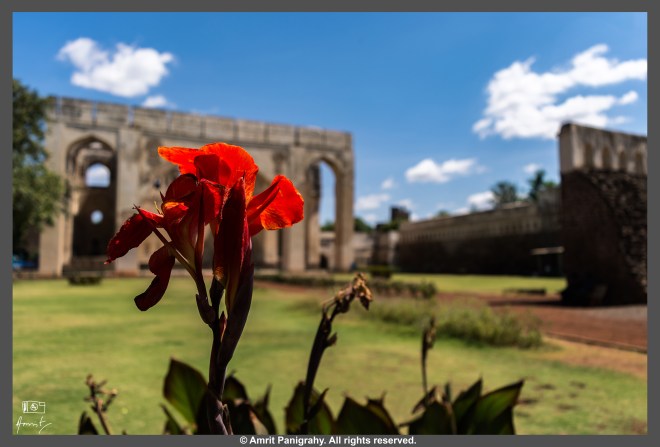
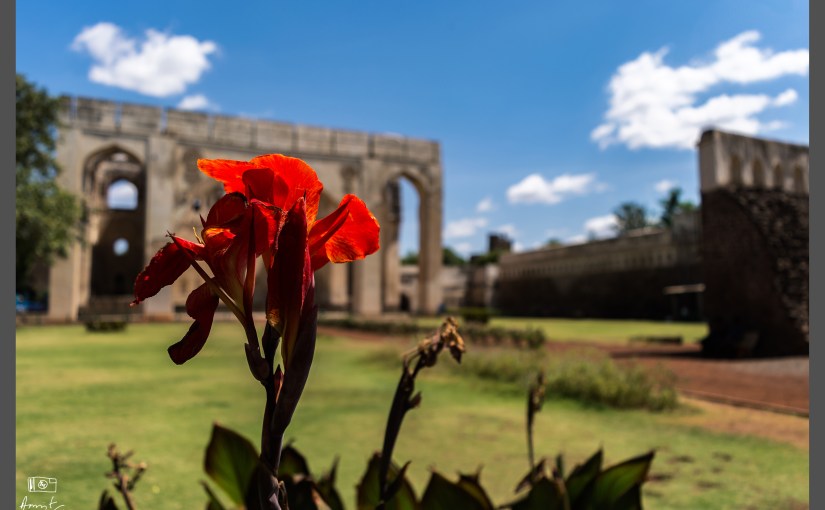
Image: A Canna Red King Humbert flower with Gagan Mahal in the background, in Bijapur, Karnataka, India

Absence of any threat from Vijayanagara and the diplomacy with other Deccan sultanates meant Bijapur could now exert its control over the majority of the newly conquered area, and most importantly over the very fertile Raichur doab. Steady revenue inflows from the Raichur doab and other conquered  dominions down south, and the immense wealth that was plundered after sacking of the capital of Vijayanagara, improved Bijapur’s finances by manifolds. This newfound abundance was used in uplifting the lifestyle of the subjects, creating architectural marvels, and patronizing art.

The Jagadguru Badshah:

After the demise of Ali Adil Shah I in 1579 AD, his adopted son Ibrahim Adil Shah II took over the reign as Sultan of Bijapur. The new Sultan was a class apart from his predecessors, and would stay so from his successors too. His reign would last for five decades, one fourths of Bijapur sultanate’s total existence. These five decades would unquestionably be the golden period of Bijapur sultanate. The sultanate would transform from religious tolerance as a state policy to religious inclusion, thanks to the Sultan’s efforts to bring cultural harmony between Shias and Sunnis, and Hindus and Muslims.

Ibrahim Adil Shah II would go on to become an acclaimed poet, in addition to being an able and just ruler. He is credited with composing Kitab-e-Navras, which is a collection of 59 poems and 17 couplets, dedicated to Goddess Saraswati, Lord Ganapati, his queen Chaand Sultana, and also his Tanpura “Moti Khan” and his elephant “Atis Khan”, among other things.

All of this earned him the title of “Jagadguru Badshah”. In addition, Ibrahim Adil Shah II gave Bijapur its most prized possession. No, it is not the Gol Gumbaz. He commissioned building of a very ornate mausoleum for his queen consort, Taj Sultana. And by doing so, in all probability he laid the foundation of the idea to dedicate grand mausoleums to consorts, which culminated in the grandest of them all, the Taj Mahal in Agra. Though the mausoleum he had commissioned was built for his queen consort, he was the one to die first and to be buried there. Hence, the mausoleum got its name, Ibrahim Rouza, also called the Black Taj, or the Taj of Deccan (contested, as Bibi ka Maqbara in Aurangabad is also known as the Taj of Deccan).
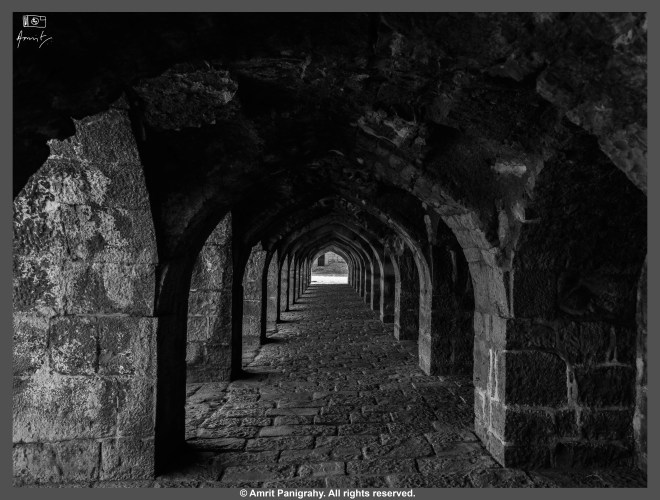
Part 2 FB

Image: The corridor outside the catacomb of Ibrahim Rouza, in Bijapur, Karnataka, India

With the demise of Ibrahim Adil Shah II in 1627 AD, Bijapur would near the end of its golden period.

Mohammaed Adil Shah and the curse of the Maratha:

Mohammed Adil Shah took over the throne of Bijapur after his father’s death in 1627 AD. He took over the reigns of Bijapur when the sultanate was at its zenith, and he tried his best to live up to his father’s reputation in his three decades of rule. His efforts were mainly focused on improving the socio-economic and educational standards of his subjects, and succeeded to a large extent.

However, his best known contributions to the history would be these two: 1) Gol Gumbaz, his mausoleum, which is the world’s second largest freestanding dome, and dominates the Bijapuri skyline to date; and 2) His dealing with the revolt of Shahji (Shivaji’s father) and later Shivaji, which turned the Marathas against Bijapur and shaped the present of India as we know today.
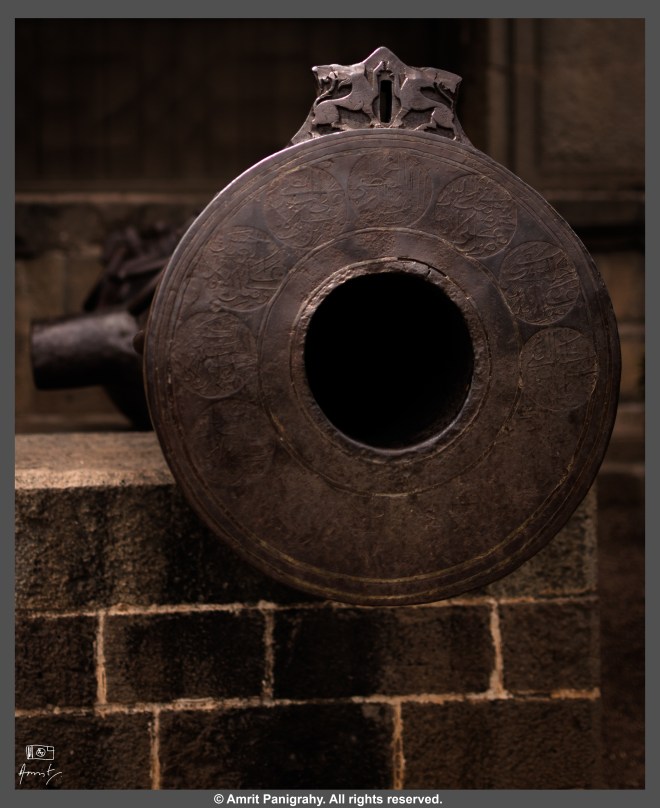
MM-4 FB

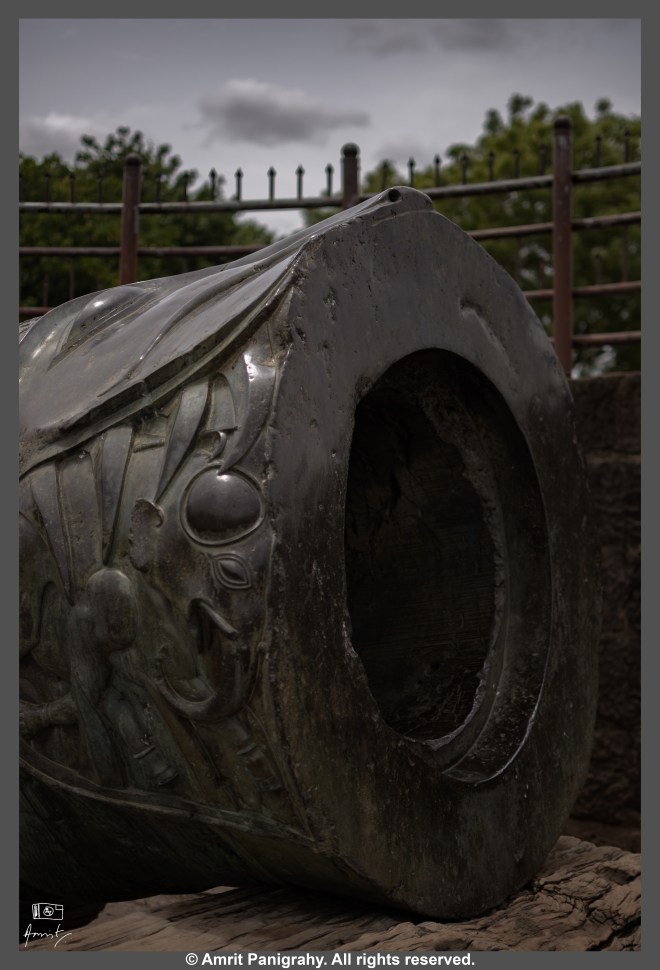
Image: One of the canons outside the museum near Gol Gumbaz, in Bijapur, Karnataka, India

The Marathas had fought alongside the Deccan sultanates in the battle of Talikota against the Vijayanagara empire. However, events leading up to Bijapur’s alliance with the Mughals during Shah Jahan’s campaign against the Nizam Shahis of Ahmednagar saw Shahji’s Maratha forces fighting for the sovereignty of the Nizam Shahis. During this campaign Shahji is credited with the decimation of the combined Mughal and Adil Shahi forces manifolds larger than that of his Marathas. Unfavorable turn of events would see Shahji accepting Adil Shahi supremacy and being deputed to manage the jagir of Bangalore, further south.

Shahji would then send his son Shivaji and wife Jijabai to manage his jagirs in Pune. Driven by the vengeance to correct the injustice done to his father by the Adil Shahis, Shivaji would start taking over Bijapur territories, capturing his first fort at a tender age of fifteen. Shivaji’s “misadventures” would “compel” Mohammed Adil Shah to let lose his trusted general Afzal Khan, to teach Shivaji a lesson. This decision, as the Adil Shahis would realize later, would cost them dearly.

Afzal Khan was a big man driven by a strong desire to prove his worth. Notwithstanding Afzal Khan’s bravery on battlefields and physical built, he was of questionable repute and on many occasions had used deception to his advantage. Till this point in time, Marathas were unaffected by the ongoing rivalry between Shivaji and Adil Shahis.
Part 2-3 FB

Image: A priest in Tulja Bhavani temple, in Tuljapur, Maharashtra, India

On a relentless pursuit, Afzal Khan would then kill Shivaji’s elder brother Sambhaji using deception, after having asked him to come for negotiations. Sometime later, to provoke and drive out Shivaji, Afzal Khan would attack on the Bhavani temple, in Tuljapur, and Vittala temple, in Pandharpur, desecrating the temples in the process. This was a stark departure from Adil Shahi state policy of religious tolerance and inclusion. These events would slowly turn the tides in favor of Shivaji, when other Maratha clans and sub-clans would rally behind him against the Bijapuri forces, grossly angered and humiliated by Afzal Khan’s actions.

Shivaji would kill Afzal Khan, when the latter would try to kill him using the same tactic he had used against Sambhaji, and in the ensuing battle of Pratapgadh, Bijapuri forces would be annihilated. Even after the defeat of Bijapuri forces in subsequent battles with the Marathas, Shah Jahan would still be respecting his treaty with Mohammed Adil Shah, and would allow the latter rule over a sovereign Bijapur. But this wouldn’t last long.

After Mohammed Adil Shah’s demise, his son Ali Adil Shah II would ascend the throne. Constant fighting with the Marathas had already weakened the Bijapur sultanate by then. And a few years later Shah Jahan would give in to the pressure from Aurangzeb and sanction a war against Bijapur to annex it into the Mughal empire. Ali Adil Shah II would die as the last independent Sultan of Bijapur, in 1672 AD. Mughal’s under Aurangzeb would finally annex Bijpaur in 1686 AD. This would give rise to the last of the three most bitterly fought rivalries of the Indian subcontinent of that millenium, that of Shivaji and Aurangzeb (the first being between Prithviraj Chauhan and Muhammed of Ghor, and the second between Rana Pratap and Akbar).

Conclusion:

There, two centuries of Adil Shahi history of Bijapur in two parts of “Dome Diaries”. It is fascinating how a certain event leads to a chain of events that change the course of time. For example, had Mohammed Adil Shah tried to negotiate with Shivaji instead of using a military commander like Afzal Khan, India’s past and present would have been entirely different.

Unfortunately, we have not been fully appraised of the past that has shaped our present. I have been reading about history of ancient and medieval India for some time now. It fascinates how (un)related events of India of the past that shaped up the India of today, are (conveniently) ignored by our history books. Few weeks ago, I had written a small piece on drawing parallels during medieval India, and called it “Drawing Parallels”. You can read it here.

END OF PART II

Dome Diaries Navigator – Prologue  ||  Part I  ||  Part II  ||  Part III  ||  Epilogue

In frame (in order of appearance): 1) A Canna Red King Humbert flower with Gagan Mahal in the background, in Bijapur, Karnataka, India. Gagan Mahal is one of the many palaces in Bijapur.

2) The corridor outside the catacomb in Ibrahim Rouza, Bijapur, Karnataka, India.

3) One of the many canons outside the museum near Gol Gumbaz, in Bijapur, Karnataka, India. The inscriptions on the face are names of the twelve Imams of the Shia Muslims. This canon is believed to have adorned one of the many bastions on the fort wall, during the reign of Ali Adil Shah I.

4) A priest of Tulja Bhavani, inside the Tulja Bhavani temple, in Tuljapur, Maharashtra, India.

VERY IMPORTANT TO NOTE: Yes, you can share this work with proper attribution. But, please seek permission before using this work (not including the photo), partially or fully. YOU CAN NOT USE THE PHOTO. Believe me, asking is better than ending up in court or facing public shaming on social media. Thanks for understanding.

© Amrit Panigrahy. All rights reserved.
Dome Diaries – Part I: Rise of Adil Shahi, with envy from Delhi?

Dome Diaries Navigator – Prologue  ||  Part I  ||  Part II  ||  Part III  ||  Epilogue

Background:

Black clouds gathered on India’s north western borders adjoining Afghanistan in the middle of 12th century AD. The defeat of Prithviraj Chauhan at the hands of Muhammad of Ghor would create a vaccuum so powerful in the north, that it would suck hordes of invaders. These black clouds as if consolidated into a storm that would batter the Indian sub-continent for almost two centuries.

After having established foothold of Ghurid empire in India, Muhammad of Ghor would leave Delhi and India to his trusted slave and general – Qutbu l-Din Aibak, who would go on to establish the Delhi sultanate under the first dynasty, called the Mamluk or Slave dynasty. The Slave dynasty then would give way to the Khiljis, within a century of Prithviraj Chauhan’s death. The Khiljis would then give way to the Tughluqs in another thirty odd years. The Tughluqs would rule India for another century. Under Muhammad bin Tughluq (of Delhi to Daulatabad fame, also known as the “wise fool”), the Delhi sultanate would reach its maximum size, a size that could rival the Mauryan empire under Emperor Ashoka millenia earlier, or the Mughal empire under Aurangzeb centuries later.

One thing in common between the first three dynasties of Delhi sultanate was the fact that they ruled over this vast expanse of land not as their own, but as invaders. The mindset of invaders and plunderers coupled with insecurities of losing their reigns to their kin or the fear of an uprising by the masses, made most of the early Sultans of Delhi sultanate some of the cruelest rulers the world would ever see. These rulers were so cruel, that even a slightly lenient/tolerant ruler in their comparison will come across as a Messiah. Please refer to Ibn Batuta’s travelogues and other contemporary accounts for better understanding of their cruelty.

Having amassed an empire that could easily rival the largest empires of the world of that time, Muhammad bin Tughluq left it to his trusted generals and governors to take care of the different provinces of his sultanate, before retiring to Delhi. Foreseeing the fading influence of the Sultan, these generals started declaring independence one after the other. No, this wasn’t unusual! In fact, this was the standard practice of the time – Qutbu l-Din Aibak served Muhammad of Ghor, Firuz Khilji (founder of Khilji dynasty) served Qutbu l-Din Aibak’s Mamluk dynasty, Ghiyasuddin Tughlaq (founder of Tughlaq dynasty) served the Khiljis.

The Bahmani Sultanate and emergence of Adil Shahi:

Part 1 Header FB

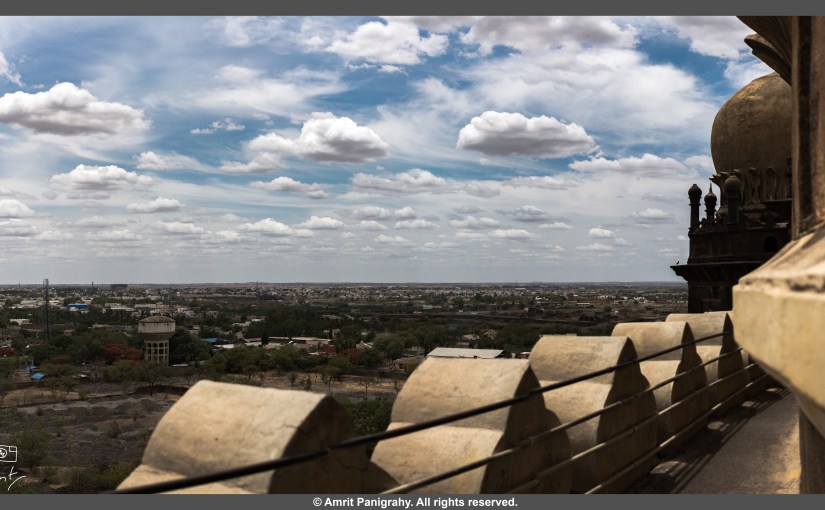
Image: Bijapuri skyline from top of the Gol Gumbuz, in Bijapur, Karnataka, India

As per the norm prevalent at that time, appeared in the scene Ala-ud-Din Hasan Bahman Shah, also known as Hasan Gangu. Bahman Shah was the then governor of Deccan under Muhammad bin Tughluq, and declared independence to establish the Bahmani sultanate, with its capital at Gulbarga (now Kalaburgi) and later moved to Bidar, in Karnataka. Per some historians, Bahman is actually derived from the word Brahmin (the Hindu caste), questionably either because of Bahman Shah’s Brahmin ancestry, or the caste of his earlier master Gangadhar Shastri Wabale (from whom he also got his other name, Hasan Gangu).

Bahman Shah could not have chosen a worse time to lay the foundation of his Bahmani sultanate, as only a decade earlier, further south in the peninsular India had emerged another power – the Vijayanagara empire. For the major part of its existence, the Bahmani sultanate would find itself engaged in mutliple battles with Vijayanagara empire contesting for power and control over land, especially the Raichur doab, before being weakened and disintegrating into five sultanates of Deccan, together called as Deccan sultanates – The sultanates of Nizam Shahi of Ahmednagar, Imad Shahi of Berar, Barid Shahi of Bidar, Qutb Shahi of Golconda and Adil Shahi of Bijapur.

Yusuf Adil Shah, founder of the Adil Shahi dynasty of Bijapur served the Bahmani sultanate before declaring independence. For the next five decades, the five Deccan sultanates would be played against each other by Vijayanagara empire’s diplomacy, before coming together in a confederacy in the battle of Talikota in 1565 AD and defeating Vijayanagara. Vijayanagara empire would not recover from this defeat, paving way for consolidation of power in southern India. Hence, the battle of Talikota is seen as a pivotal point in history of India and southern India in particular. The confederacy of the Deccan sultanates was the brain child of Ali Adil Shah I, the fifth Sultan of Bijapur.

Off the topic, but worth mentioning here that the battle of Talikota also saw the Nizam Shahi of Ahmednagar pressing Malik-e-Maidan, the largest canon of its time into service.

MM-2 FB

Image: Malik-e-Maidan the second largest medieval canon in India, which now adorns a bastion on the western wall of the fort, in Bijapur, Karnataka, India

Consolidation:

After having tackled the dangers to the south, the Adil Shahis under Ali Adil Shah I and later Sultans, focused on consolidating their power, through a clever combination of marriage alliances (with Nizam Shahis of Ahmednagar and Qutb Shahis of Golconda) and military campaigns (against Barid Shahis of Bidar).

The plundered wealth from Vijayanagara gave the Adil Shahis the much needed capital infusion at the end of a very tumultuous period. The wealth was used to launch numerous ambitious projects under succeeding Sultans. The absence of any real threat for the next eight decades meant that the Adil Shahis focused more on culture, and art and creation of architectural marvels.

While the Adil Shahis were busy consolidating their powers to the south of Vindhyas, the Mughal empire under Akbar was making steady progress into peninsular India, having subdued Malwa and Khandesh in the process. Here, again a precious piece of history is lost as a footnote in the history books, because some historian mistook Akbar and Delhi for India.

I have been reading about history of ancient and medieval India for some time now. It fascinates how (un)related events of India of the past that shaped up the India of today, are (conveniently) ignored by our history books. Few weeks ago, I had written a small piece on drawing parallels during medieval India, and called it “Drawing Parallels”. You can read it here.

END OF PART I

Dome Diaries Navigator – Prologue  ||  Part I  ||  Part II  ||  Part III  ||  Epilogue

In frame (in order of appearance): 1) Cotton candies and Bijapuri skyline, from top of Gol Gombuz, Bijapur, Karnataka. Gol Gombuz is the second largest freestanding dome in the world. The outer as well as inner side of the dome is accessible through staircases inside the minars on all four sides of the structure.

2) Malik-e-Maidan, the second largest medieval canon in Indian subcontinent. Made of five metals, this canon weighs 55 tonnes and had a range of 3-5 kilometers. Noticed closely, you can notice the legs of a horse (signifying the canon’s range), an elephant body (signifying the canon’s weight), inside a lion’s mouth (signifying the canon’s roar when fired). Originally cast by the Nizam Shahis of Ahmednagar in 1549 AD, the Malik-e-Maidan now adorns a bastion on the western wall of the Bijapur fort.

VERY IMPORTANT TO NOTE: Yes, you can share this work with proper attribution. But, please seek permission before using this work (not including the photo), partially or fully. YOU CAN NOT USE THE PHOTO. Believe me, asking is better than ending up in court or facing public shaming on social media. Thanks for understanding.

© Amrit Panigrahy. All rights reserved.


Dome Diaries – Prologue

Dome Diaries Navigator – Prologue  ||  Part I  ||  Part II  ||  Part III  ||  Epilogue

There, a brief but bright lightning far away and on my right side. One more, this time slightly closer and in the front. And as I press the accelerator, dry leaves fly on to my path and get illuminated in front of the headlamps. The winds are picking up and I can feel the crosswinds on my steering wheel. Most probably an end of summer thunderstorm. It has been dark for some time now and this stretch of road is narrow, as it passes through a reserve forest. Bad time and place to get caught in rains!

And my desk phone rang. It was the client. Damn! I was day-dreaming, again, lost in my thoughts as I stared at my desktop monitor. As if I had been teleported to one of the scenes from my recent solo road-trip.

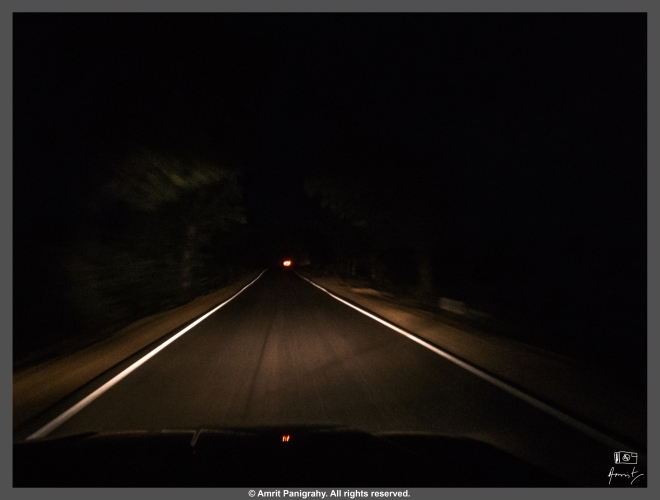
A scene which looked like this!

Screen FB

This happens every time I come back from a trip. As if my heart stays outside the city limits, and refuses to come back in with me. And then, it keeps calling me to get out on my next trip!

This one was a long weekend road-trip. Long weekends are meant for travel, because I have recently realized that sleeping is too lazy. I realize things late, like thirty-odd-years late. Anyways, I thought of taking Pearl (that’s what I call my Scorpio; and yes, it is perfectly normal behavior!) out to stretch her legs a bit. And when you take a Scorpio out to stretch its legs, the most important thing it needs is leg room. My Pearl is no different! I decided 400kms one side was just enough leg room Pearl would need for stretching. So, Bijapur it was!

For starters, Bijapur (presently known as Vijayapura, in Karnataka, India) was the erstwhile capital of the Adil Shahis, one of the five Sultanates that the Bahamani kingdom broke into. It will not be an exaggeration if I call Bijapur as the “City of Domes”, because of the hundred odd small and big domes that dot the city’s skyline.

I have been reading about history of ancient and medieval India for some time now. It fascinates how (un)related events of India of the past that shaped up the India of today, are (conveniently) ignored by our history books. Few weeks ago, I had written a small piece on drawing parallels during medieval India, and called it “Drawing Parallels”. You can read it here.

The reason I chose Bijapur was because of the role it played in our history that shaped our present. After all, Adil Shahis of Bijapur stayed sovereign for two centuries. The same two centuries when Vijayanagara to the south, the Marathas to the west and the Mughals to the north were vying for control of the same piece of land.

Join me in a series of posts titled “Dome Diaries”, in the coming days. I will try to comprehend the later Adil Shahis of Bijapur, and their fascination for grand mausoleums, architectural marvels that are Gol Gombuz and Ibrahim Rouza, discover their religious inclinations (Adil Shahi rulers came from both sides of the Muslim community – the Shias and the Sunnis), and if possible, also their diplomacy and military might.

Dome Diaries Navigator – Prologue  ||  Part I  ||  Part II  ||  Part III  ||  Epilogue

In frame: A narrow stretch of empty road lit by my car’s headlamps and shot on mobile (No! I was not using the mobile while driving). This stretch of road was between Kalaburgi (Gulbarga as it is presently known), Karnataka and Hyderabad, Telengana, in India.

VERY IMPORTANT TO NOTE: Yes, you can share this work with proper attribution. But, please seek permission before using this work (not including the photo), partially or fully. YOU CAN NOT USE THE PHOTO. Believe me, asking is better than ending up in court or facing public shaming on social media. Thanks for understanding.

© Amrit Panigrahy. All rights reserved.
I was there…. Waiting for you!

I waited there, under our pine tree,
And I went there for many more days,
Hoping you would come one day.

It was futile, I was told,
And that you would never be back.
But, I wanted to give it a try.

I wanted to give it a try,
Just so when my time comes,
I won’t feel that I did not wait enough.

And when I realized many springs later,
That you would never come,
I left there the scarf you had given me.

The scarf, my only piece of memory of you,
For it had your scent, as fresh as dew,
It was the only thing that I had of you.

As I wanted to let you know,
Just in case you showed up..
….That…

I was there…. Waiting for you!

————————————————

DISCLAIMER: Penned by yours truly, this poem is a work of fiction. Any resemblance to any person living or dead is purely coincidental.

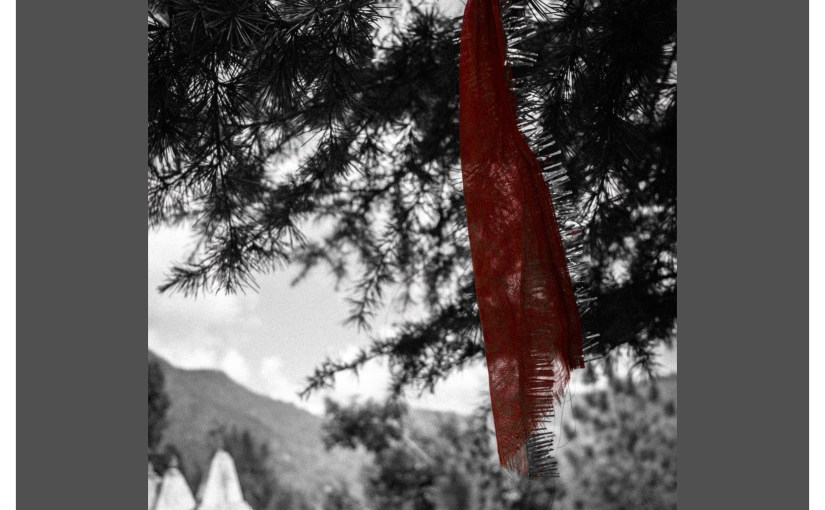
In frame: A ritualistic scarf tied to a pine tree in the Himalayas, on the way from Naitala to Guptakashi, in Uttarakhand, India. I found small temples dedicated to local Gods as well as such ritualistic things, common place in the Himalayas.

VERY IMPORTANT TO NOTE: Yes, you can share this work with proper attribution. But, please seek permission before using this work (not including the photo), partially or fully. YOU CAN NOT USE THE PHOTO. Believe me, asking is better than ending up in court or facing public shaming on social media. Thanks for understanding.

© Amrit Panigrahy. All rights reserved.
Back in school, and in style!

I should have done this post long time ago. I know I am late, by at least a couple of weeks! And I am not going to give any excuses. What am I talking about? Well, if you remember, when I introduced C to the world, I had promised to explain the rationale behind the decision. Wait! You do not remember C now, do you?

Well, let me introduce C to you once again. See below!

C final

Who is C:

C is a made in Japan 1974 Canon FTb QL all manual film SLR with a Canon 50mm f1.8 FD lens. I got her from the US after lot of searching and researching. And it took extra shipping charges, customs duty, tweets to India Post and 30 days for C and me to unite. (For those of you who are interested in vintage cameras in great working condition, I got C from an online portal called F Stop Cameras. They ship international. You can find out more here.)

I don’t find it weird to name the inanimate objects I own. I have named my Scorpio as “Pearl”, my Pulsar 200NS as “V”, and my DSLR as “N”. I also talk to them sometimes. No, it is not weird. It is just that I find these inanimate objects much more trustworthy than some humans who I have come in contact with. Of course, I am kidding! Which part you ask? The “talking” part.

Now you have been properly introduced, again!

Why C – an all manual film SLR:

When the world around me is moving at a breakneck speed, what is the need for me to slow down? Going back in the cycle of evolution by going from digital to film was only going to slow me down, correct? And what purpose would it serve other than being cumbersome and making photography costlier?

Flash back to Hampi in Karnataka, India, beginning of last year. I had just got my new DSLR and the lenses. The moment I got down from my car in Hampi, I went click click click. For the next three days, all I did was click click click. By the end of it, the counter read 950. And when I took those photos to my computer, there were about only 80 frames which I could proudly show to the world. That is a dismal c8% hit rate.

Confession time! I admit, that was the problem with my style of photography when I had just started taking this art seriously. I took hundreds of photographs and hoped that I will get few worthy frames. And in the frenzy of pressing the shutter button, I was being oblivious to the events around me. If Henri Cartier-Bresson would have been around me during that madness, he would have slapped me for missing The Decisive Moment. So, when I was just pressing the shutter button instead of making a photograph, where was the art in that, I thought! Hence, I decided to slow down.

Since that trip to Hampi I have been out on numerous tours, and I thought I had slowed down considerably. Had I? Though the hit rate had improved considerably, I was still taking a lot of bad photographs – for example the subject was not in focus, or I forgot to change the settings (I always shoot manual), or the framing was not done properly, or all of the above.

I was getting worried about how I was making photographs. I had hit a plateau as far as improving the quality of my frames were considered. I considered myself a 10/10 as far as theory of photography was concerned. But when it came to practical application, I was being a mediocre at best. And they say photography is all about practical application. There was one important ingredient missing from my recipe. After a lot of contemplation, I found it!

Attention! That was the missing ingredient. I was not paying enough attention. I was not being attentive enough, while making photographs. The only way to bring attention to the forefront was to attach some kind of a cost for each bad photograph, I thought. And the only way I could have done it was by relearning photography on film. Also, I felt the less automatic controls the better, and hence an all manual film SLR.

Also, if you are serious about making it big in your chosen field, the best way to learn is by learning the same way as the greats in your field did. In photography, invariably all of the greats learned the trade on film cameras.

Also, film SLRs make you appear much cooler in the field! And who doesn’t want to appear cooler than the crowd?

The first roll and what I learned:

To start with, C had developed some snags, owing to few lose screws on the lens. I had factored these snags in my expectations. I mean, who won’t, especially when the camera you are shooting with is 43 years old! A camera repair shop in Hyderabad repaired it for me and for free. You can find more about the repair shop here.

I had ordered a couple of Ilford HPS 400 B&W 35mm rolls to start with. I intend to shoot B&W till I get bored with them. I have successfully finished the first roll, and as I write, I am in the process of shipping it to Mumbai to get it developed. I just hope that I didn’t expose few frames while rewinding the film. This was the first time I was rewinding the film manually, you see!

The first thing I noticed was the weight of the camera body. And the heavy shutter click. So much so that camera shake will be evident at shutter speeds of anything less than 1/60th of a second. Looking at the brighter side of it, my hands will tend to become steadier. They call it muscle memory!

There is no auto mode in the camera, so I understand the exposure triangle better. Also, because there is no auto focus, I have sharpened my manual focusing skills and learned about zone focusing.

And I saved the best one for the last! When I visited the vanishing beach of Chandipur, in coastal Odisha, India, in my recently concluded trip, I actually waited for my subjects to walk into my frame. The waits lasted between 2-5 minutes, and on one occasion it lasted close to 10 minutes. I realised that I have become more patient and much more attentive about my surroundings.

To tell you more about C and my recently concluded trip, as a challenge to myself I deliberately did not pack my DLSR for this one. I photographed with C on the beach, on the street at night and in an event. I just hope that the frames turn out alright. And even if most of the 36 frames do not turn out alright, the learning experiences alone will make the effort worthwhile. Fingers crossed!

In the meantime, please keep an eye on the Project 35 page in the menu at top for the photos.

In frame: C, my made in Japan 1974 Canon FTb QL all manual film SLR with a Canon 50mm f1.8 FD lens.

VERY IMPORTANT TO NOTE: Yes, you can share this work with proper attribution. But, please seek permission before using this work (not including the photo), partially or fully. YOU CAN NOT USE THE PHOTO. Believe me, asking is better than ending up in court or facing public shaming on social media. Thanks for understanding.

A wait too long!

It was a mad rush inside the temple. And owing to my short height, it was impossible for me to have a glance at the deities, let alone having a good look. So, I tugged at my father’s shirt and asked him to pick me up and hold me in his arms so that I could take a good look. I was curious to understand what was all the fuss about these three half-finished deities sitting on that raised platform. And he picked me up! I saw He had a pleasant smile on His face, His big round eyes seeing everything, and His arms extended to embrace everyone.

I was 9 when I last had the opportunity to go see Lord Jagannath and His siblings in His abode in Puri. Year 1991 was the year of Godavari Pushkaram, the most recent one being in 2015. Hindus consider it auspicious to take a dip in the waters of Godavari during that time. And it is considered to be even more auspicious if you visit Jagannath Puri after the holy dip in Godavari. So, we did! Needless to say, it was a road-trip – from my hometown in southern Odisha, to Rajahmundry on the banks of Godavari, in Andhra Pradesh, to Jagannath Puri in Odisha and back to my hometown.

We were staying in one of my uncle’s house in one of the narrow by lanes of Puri. Those were the days when there were no mobiles and no internet, and in the name of TV channels we had only Doordarshan. Unlike kids of today, we had no option but to have fun. So, my parents did not have to pester me and my brother to get ready to go out with them to explore Puri. I have only faint memories of Puri. What I strongly remember from that evening however, is the feeling of not feeling one’s legs from all the walking. The year was 1991!

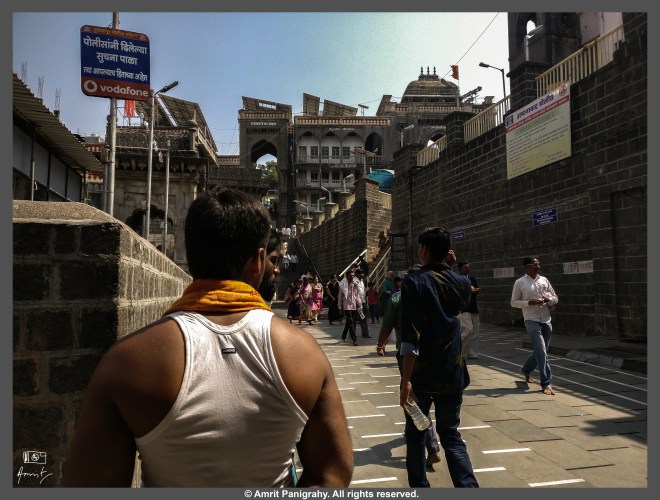
Jagannath Temple, Puri
Street outside the Jagannath temple in Puri, Odisha, India. It is called Bada Danda in Odia, literally translating into Grand Road.

Then I “grew up”, and started having a “life”. I travelled the length of coastal Odisha many times, but never got a chance to revisit Puri. Then, like any other good Hindu, I blamed it on Him – “Jagannath hasn’t called me to visit him yet”. And in the meantime, 26 years went by.

Lord Jagannath and his siblings are as human as Gods can get. As human as visiting their aunt every year (Rathyatra) to getting ill after spending too much time in the water (Snana Yatra) to fighting with the spouse (Hera Panchami) to leaving the old body and consecrating into a new one (Nabakalebara).

While the previous deity of Lord Jagannath (which existed before the Nabakalebara of 2015) was considered to be very tolerant towards human behaviour, the current deity of Lord Jagannath is considered to be action-minded and an angrier one at that. It was only wise to stop blaming Him for not visiting and pay him a visit in his abode, I thought.

So, I visited Him after 26 years. And guess what! He looked all the same to me, like He did when I was 9 years of age. The same pleasant smile on His face, His big round eyes seeing everything, and His arms extended to embrace His whole creation. He is cool, I realised! May be a little but upset with me because I took 26 years to come back, but He was cool!

This being the month of May, it was very humid inside the temple. And because of the repair work going on in the Jagamohan (the assembly hall in front of the sanctum sanctorum), devotees are not allowed to have a closer look. Yes, His abode needs repairs too! That’s why I said He is as human as a God can get.

My visit to Puri lasted for only 90 minutes. Getting a glimpse of Him was my only purpose in Puri this time, and I was glad that I succeeded. And I realised that He calls us all the time, it is us who fail to comply and blame Him instead.

I plan to visit Puri again during Rathyatra this year, to relive my childhood memories, and after doing so bring you back the stories of Lord Jagannath and Puri.

Jai Jagannath!

In frame: Street outside the Jagannath temple in Puri, Odisha, India. It is called Bada Danda in Odia, literally translating into Grand Road. Kindly bear with lower quality of this photo. It was taken using my mobile and not my DSLR, as I am carrying only my 35mm film SLR this time as part of a challenge to myself.

VERY IMPORTANT TO NOTE: Yes, you can share this work with proper attribution. But, please seek permission before using this work (not including the photo), partially or fully. YOU CAN NOT USE THE PHOTO. Believe me, asking is better than ending up in court or facing public shaming on social media. Thanks for understanding.

© Amrit Panigrahy. All rights reserved.

The Ascend

The wheels of the royal ceremonial gold chariot screeched to a halt on the gravel road behind the Mahanavami Dibba. A well-built dark skinned man, in his mid-twenties, climbed down from the chariot.

A masculine face with neatly trimmed moustache, but the cut on his left cheek which ran almost the full length from just below the eye, looked fresh – a parting gift from a beloved enemy, perhaps. Laden in gold jewellery that were studded with precious stones of all sizes and colors, he wore a bright pink angavastram made of silk and a white silk dhoti. He wore a turban made of yellow silk, and attached to it was the royal pin, which had the largest diamond of all. In his right hand he was holding a precious stone studded gold scabbard, and inside was the sword that whole of the subcontinent bowed down to – the Sword of Vijayanagara.

Standing below the flight of stairs inside the royal entrance at the back of the Dibba, the new King looked up to the portion of the blue sky that was visible. The royal trumpeters on top of the Dibba blew the trumpets, announcing the arrival of the new King of Vijayanagara. The chatter among the crowd stopped. Then the drummers started beating the big drums across the palace complex, in a rhythm. And the crowd started cheering – “Long live the King! Long live the King….”

“Doesn’t anyone remember what happened in last one month leading up to today?”, the new King asked himself.

The new King was the eldest son and heir apparent to the throne of Vijayanagara, and was the most capable. He had been groomed to be the King, right from the day he started walking. He was trained to be the best in sword fight, archery and hand to hand combats in the whole of Vijayanagara empire. And he was well conversant in the Vedas, Upanishads, Gita and Chanakya’s Arthashastra. For the last two years, he had been fighting the Moslems in the north, and had subjugated two Bahmani Sultanates. It was in last one month that everything changed, for better or for worse. The old King took ill suddenly, and was killed in his sleep by one of his younger sons, the new King’s half-brother.

This is when the new King had to ride back to the capital city of Hampi, to confront his half-brother, and to claim the throne that was rightfully his. The situation had changed completely while he was away. Most of the old royal staff had been replaced with loyalists of his half-brother. He knew that his half-brother wouldn’t dare to touch him in broad day light. He confronted him in the palace courtyard, with a handful of his father’s loyalists.

This is when the confrontation turned physical. His half-brother took out a dagger and took a wild swing. He leaned back, but couldn’t move completely away from the dagger’s path, and it sliced him on the left cheek and the wound ran almost the full length from just below the eye. In one continous motion, he took his dagger out, pushed it deep in to his half-brother’s throat, killing him instantly.

Then began the clean-up act. For next two weeks, all the loyalists of his half-brother were either killed or jailed, eliminated systematically. He didn’t stop until everyone of them who had helped his half-brother had been punished. That was the last one month.

As the new King stood below the flight of stairs pondering, the Rajguru touched his shoulder and signalled politely that he should ascend and show himself to the world, to show the world that everything was in control. The King nodded his head and agreement and thought, “Doesn’t anyone really remember?”

DISCLAIMER: This is a work of fiction. Any resemblance to any person living or dead is purely coincidental.

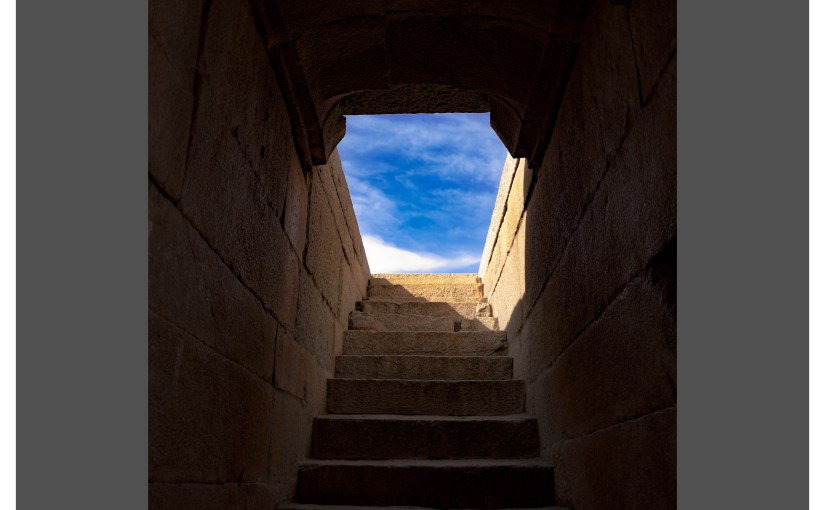
In frame: The sky from below the flight of stairs, inside the back entrance of Mahanavami Dibba, inside the palace complex in Hampi, Karnataka, India. Mahanavami Dibba was used as a platform by the royals of Vijayanagara to watch the Dussehra celebrations, as well as on special royal ceremonies.

VERY IMPORTANT TO NOTE: Yes, you can share this work with proper attribution. But, please seek permission before using this work (not including the photo), partially or fully. YOU CAN NOT USE THE PHOTO. Believe me, asking is better than ending up in court or facing public shaming on social media. Thanks for understanding.

© Amrit Panigrahy. All rights reserved.
She’s the only one I got

Ours is a unique “love” story, as one-sided as it gets. She is so good, all she has ever known is giving. And she gives without expecting anything in return. She gives without asking. She gives more than what I need. She gives more than what I deserve. She gives even if I hurt her, beat her up, or bruise her. She gives in joy. She gives in pain. She gives me whatever she has. She loves me!

Having used her mindlessly for all these years, having bruised her in unimaginable ways, having hurt her in worse ways than worst of my nightmares, I still found her by my side. And then, I realized that she is very very special. And… She’s the only one I got!

She’s the only one you got. And, she’s the only one we got.

Earth, yours, mine and each one of ours. Our “love” for her has been so cruel, we have done unimaginable things to her. We have always taken from her, more than our fair share, and without ever giving anything back, or giving back too little. In simple terms, we have raped her in every worst way possible.

There is no “humane” way of destroying our beloved little blue marble. Other lives on this once beautiful planet are suffering the repercussions of our actions. Ever imagined why we are acting the way we are? Because, we humans have a very wrong notion of “Oh, we are so entitled”. Because, we believe everything that exists on this planet belongs to us, and it exists to serve us. We can do anything we want to anything that exists on this planet.

We were capable of learning, we were capable of improvising. We learned, and we improvised. We also CHEATED! As intended, we did not use our learning and improvisation for betterment of other lives and that of our planet. Instead, we used them to take advantage of other lives, and to screw up our planet. And with time we have become so greedy, we do everything in excess. We eat more than needed, we use more than required and naturally, we waste more than we can have.

Do you remember those Hollywood sci-fi movies, in which an alien species invades Earth because it has exhausted the “resources” on its own planet? Do you like those aliens? No? Well, those alien characters are based on our greed! Having almost screwed up our planet successfully, we are now looking at other planets in the solar system and beyond, to implement our scheme of things and screw them up too.

All those cyclones, floods, unseasonal rains, droughts, rising temperatures and missing seasons of the recent times are a grim reminder that though she loves us unconditionally, our Earth can fall sick too. And when she does, all hell breaks lose! So, hoping that it is not too late, let’s do our bit to prevent her from falling sick. However small it may seem, but let’s start for once. Be it closing that tap, or switching off the engine at the traffic signal, or not using polythene, or reusing/recycling, or planting that one tree sapling. Let’s us do how much ever we can do. And let it not be restricted to mere symbolism.

As far as I am concerned, I do not use the AC in my car when I am travelling alone, not even in this hot summer. I had turned a vegetarian for some other reason, but I intend to stay a vegetarian for the rest of my life, because recently I came to know that animal agriculture for meat production generates more harmful greenhouse gases than all cars put together (read here). And with time, I intend to do more. Pitch in with my small little efforts, even if it sometimes results in discomfort for me.

Why am I doing this? For everything that I have put her through, I have realized that I can not live without her, quite literally! And I have fallen in love with her. Because, she’s the only one I got. She’s the only one you got. She’s the only one we got.

For her! Happy Earth Day, my love..

In frame: Sun rise at Naitala village, in Uttarakhand, India. This was the first morning I woke up in the laps of the Himalayas. The river in the bottom of the frame is Bhagirathi, “who” is called Ganga after Dev Prayag (Use of “who” is deliberate, because Ganga is now legally a living person. Read more about it here). All this serenity and tranquility in my mind were shattered, when I imagined the havoc floods of 2013 must have caused, scars of which were visible throughout my journey in the Himalayas.

VERY IMPORTANT TO NOTE: Yes, you can share this work with proper attribution. But, please seek permission before using this work (not including the photo), partially or fully. YOU CAN NOT USE THE PHOTO. Believe me, asking is better than ending up in court or facing public shaming on social media. Thanks for understanding.

© Amrit Panigrahy. All rights reserved.

Could you repeat that, Mr Capa?

“If your pictures are not good enough, you are not close enough.” – Robert Capa

Well, that’s what Robert Capa said. But, who was Mr Capa?

Robert Capa was the “greatest combat and adventure photographer” in history. If you are not in the photography business or have got nothing to do with cameras, you would probably not know him. An accidental photographer like many of us, he becamse a legend because of the way he dealt with his profession – dedication and commitment.

The said quote was in the context of war photography. Robert Capa lived and died during an age when there were no fancy photographic equipment. And in that age, more often than not, one had to walk in to the thick of action to get that appealing frame. We are talking about bombs going off all around, bullets whizzing past ears. That thick of an action! And it was this “getting close” part which helped Capa in capturing some of the most dramatic photographs of the wars that he covered.

How is the quote relevant for me in this age, when we have all the fancy equipment we can think of: super-zoom telephoto lenses, the best sensors, and what not? How is it relevant for me when I have not seen a live combat in my entire life? Combat as in when people are trying to kill each other! And most importantly, how is it relevant in my life? Read on for the revelation!

Capa’s quote in the context of photography:

On a scale of one to telephoto lenses, how lazy are you? That’s a weird scale, isn’t it? Not when we are discussing photography.

First, let’s all agree that photography is all about interactions with subjects. Alright? The goodness of the photograph is directly proportional to how well the photographer has interacted with the subjects. If the broad genre is people, then it becomes interaction with people, and if the broad genre is wildlife and/or nature, then it becomes interaction with the nature (insects, trees, birds and animals included). Simply put, the photographer needs to get involved with her/his subjects. And one cannot get involved with the subjects without getting closer, can (s)he?

For me, capturing people was always difficult. I was shy by nature. I was not comfortable talking to strangers. For this reason, most of the times I came across as arrogant. When I say capturing people, I do not mean staying in my comfort zone, taking out that telephoto lens and start capturing people from far off. And then, out of those thousands of photos chose one that is reasonably good and call it “candid”. Well, nothing wrong in that! Nothing wrong other than the fact that I would be bull-shitting, if I say “I capture people”. So, to challenge myself, I took up making portraits.

The photographs where the subjects look right at the viewer, I find these photographs as most intriguing. I feel these are the photographs which connect with the viewer instantly. And to capture those, the subject must be aware, and one needs to abandon all the inhibitions and ask for permission from a total stranger. That is the thrill part!

And that is the level of involvement (“getting close” in Capa’s words) one needs, irrespective of the genre of photography. All or nothing, I tell you!

With time, as I develop my skills of making a portrait, I am also developing my people skills. Now, I do not mind approaching a total stranger and ask for permission to make a portrait. If it is a “yes”, you can see the result in the portrait above. And if is a “no”, I take it in the stride and keep working on my smile.

While making portraits, how do I know how close is close enough? Well, definitely not so annoyingly close that I am encroaching my subject’s personal space. But close enough to capture the right emotions.

Below is yours truly in action, while making the portrait above. That close is close enough, I think.

IMG_3305

I have never been caught in action, except for this one time, all thanks to my good friend Amit Kumar Singh.

Capa’s quote in the context of life:

I am going to tweak that original quote slightly.

“If your life is not interesting enough, then you are not living it from close enough.”

Well, you are alive, aren’t you? And what part of “being alive” do you find not interesting?

More about Robert Capa:

Capa lived and died in an age when there were no fancy photography equipment, in an age when photographers had to “make” photographs. Yes, he died at a young age of 40 back in 1954, when he stepped on a landmine while covering the French Indochina war. He had a love story too! He was engaged to Gerda Taro, another combat photographer, who was killed in the Spanish civil war in 1937. Capa contributed primarily to Life magazine. He clicked some of his most famous photos when he accompanied Allied troops during D-day invasion, in World War II. He was the co-founder of Magnum Photos. For all his association with war and death, here is his second most famous quote:

I hope to stay unemployed as a war photographer till the end of my life.” – Robert Capa

In frame: A flower seller in Gudimalkapur flower market, Hyderabad, Telangana, India. I initiated the talk by asking if I could take pictures of the marigold flowers she was selling, and she agreed. After the photographing the marigolds, I asked if I could make her portrait, and she agreed but said it is going to cost me. So, we bargained and settled for a “nominal” amount. So much for people skills.

Also, I have used a 3-step Brenizer technique here, for the first time. These are three photographs from top to bottom merged in to one.

VERY IMPORTANT TO NOTE: Yes, you can share this work with proper attribution. But, please seek permission before using this work (not including the photo), partially or fully. YOU CAN NOT USE THE PHOTO. Believe me, asking is better than ending up in court or facing public shaming on social media. Thanks for understanding.

© Amrit Panigrahy. All rights reserved.